
How We Raise Our Puppies
West Haven Australian Labradoodles
From Early Neurological Stimulation on day 3 to your two-week go-home schedule on pickup day, here is exactly how every West Haven Australian Labradoodle puppy is raised, socialized, and prepared for life with your family.
The First 8 Weeks Set the Foundation for the Next 15 Years
The dog your puppy becomes is largely decided before they ever step foot in your home. Genetics matter — we put enormous care into the health testing and selection of our breeding dogs for exactly that reason. But temperament, confidence, and adaptability are built in those first eight weeks by whoever is doing the raising and what they choose to do with that window.
At West Haven, we do not take that responsibility lightly. Here is exactly what happens from birth to go-home day.
A Home, Not a Kennel
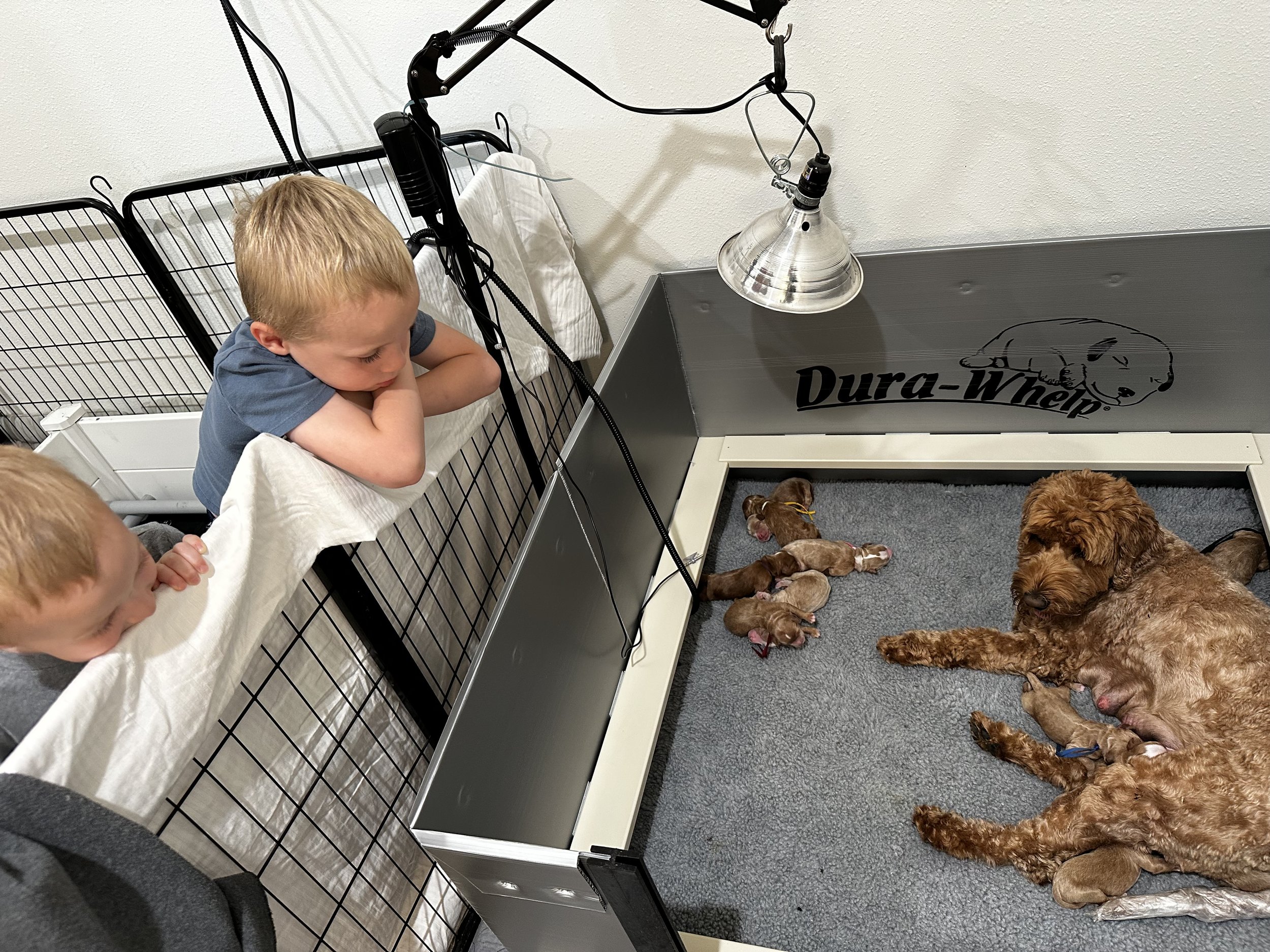
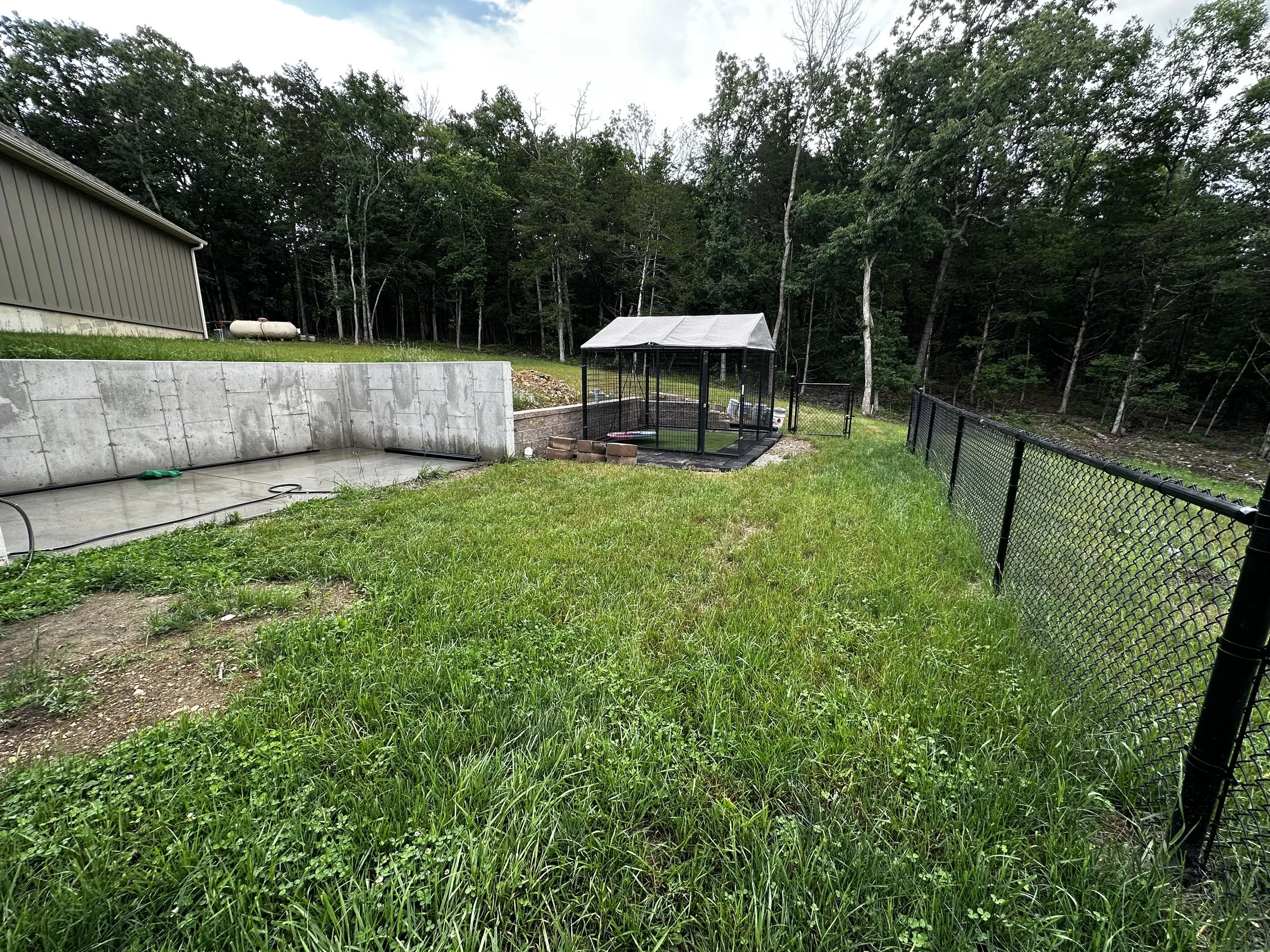
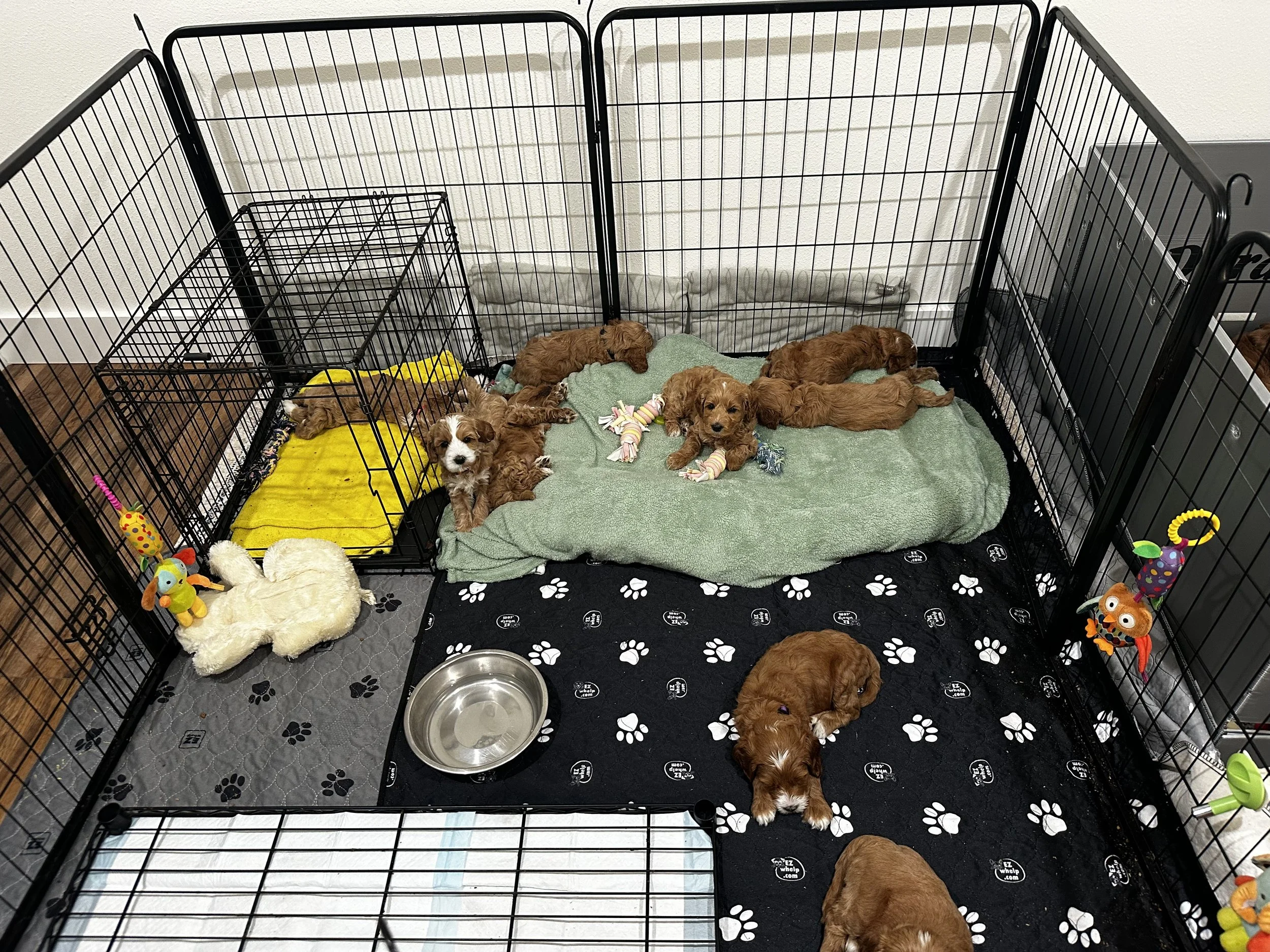
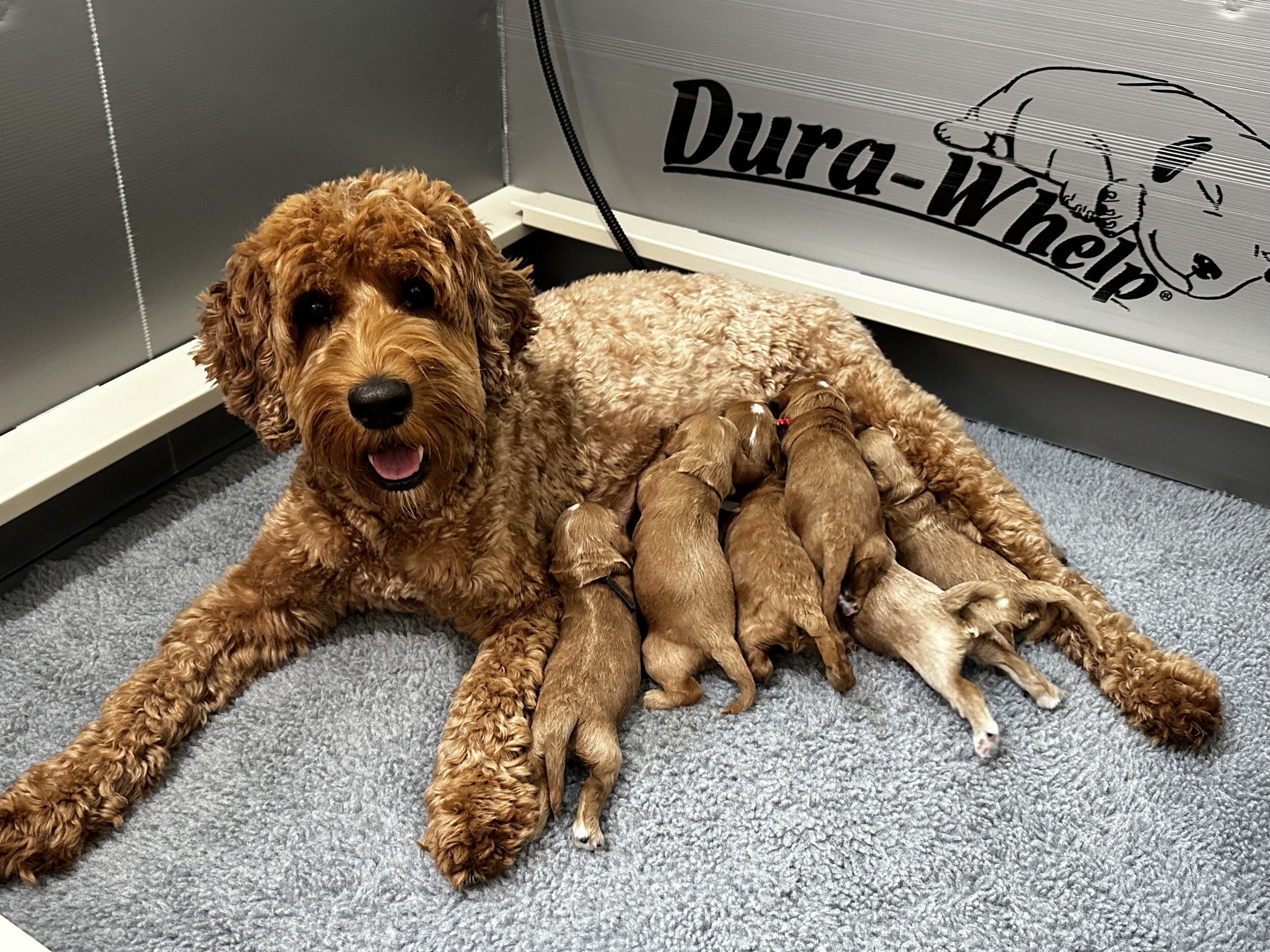
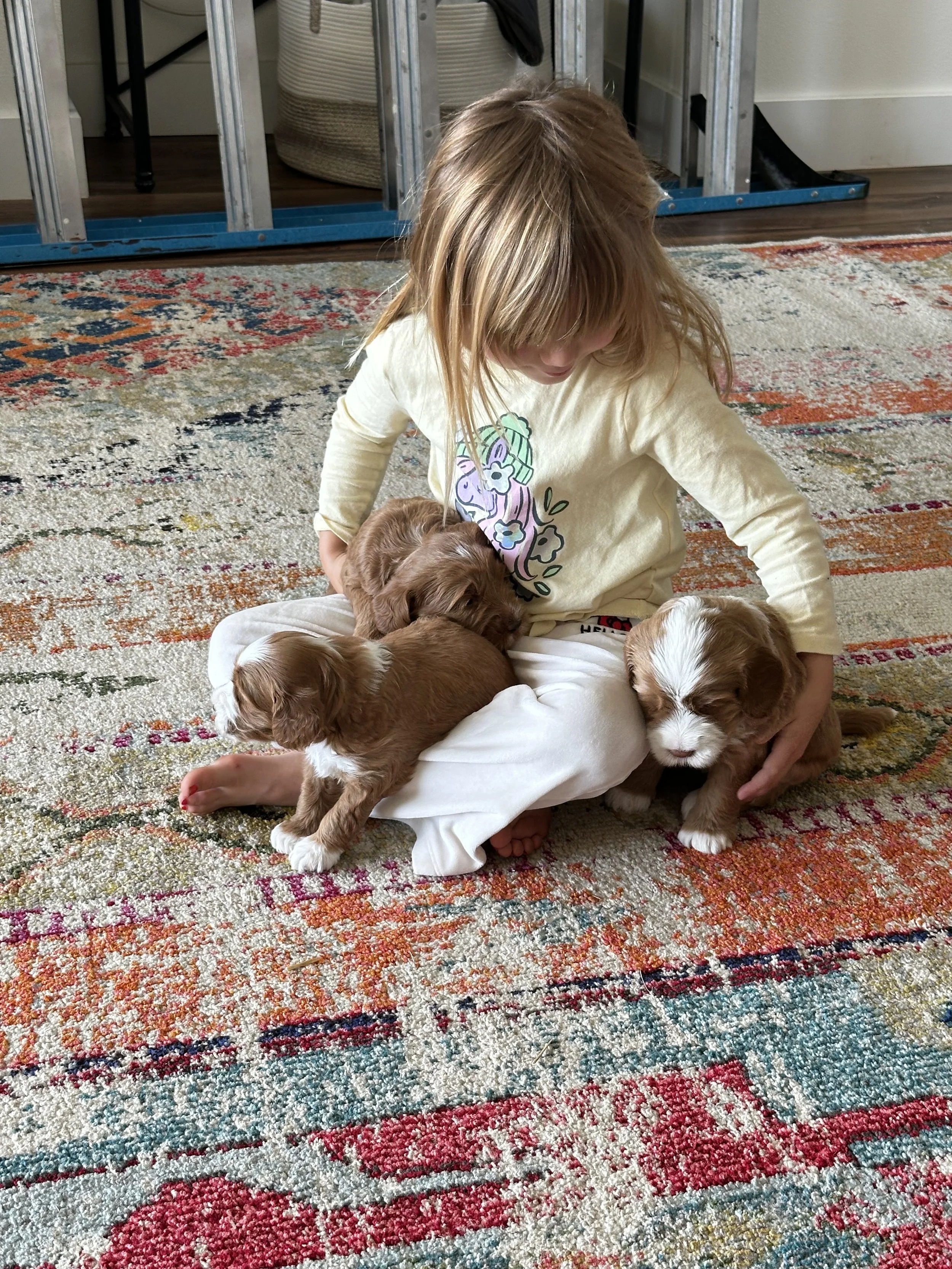
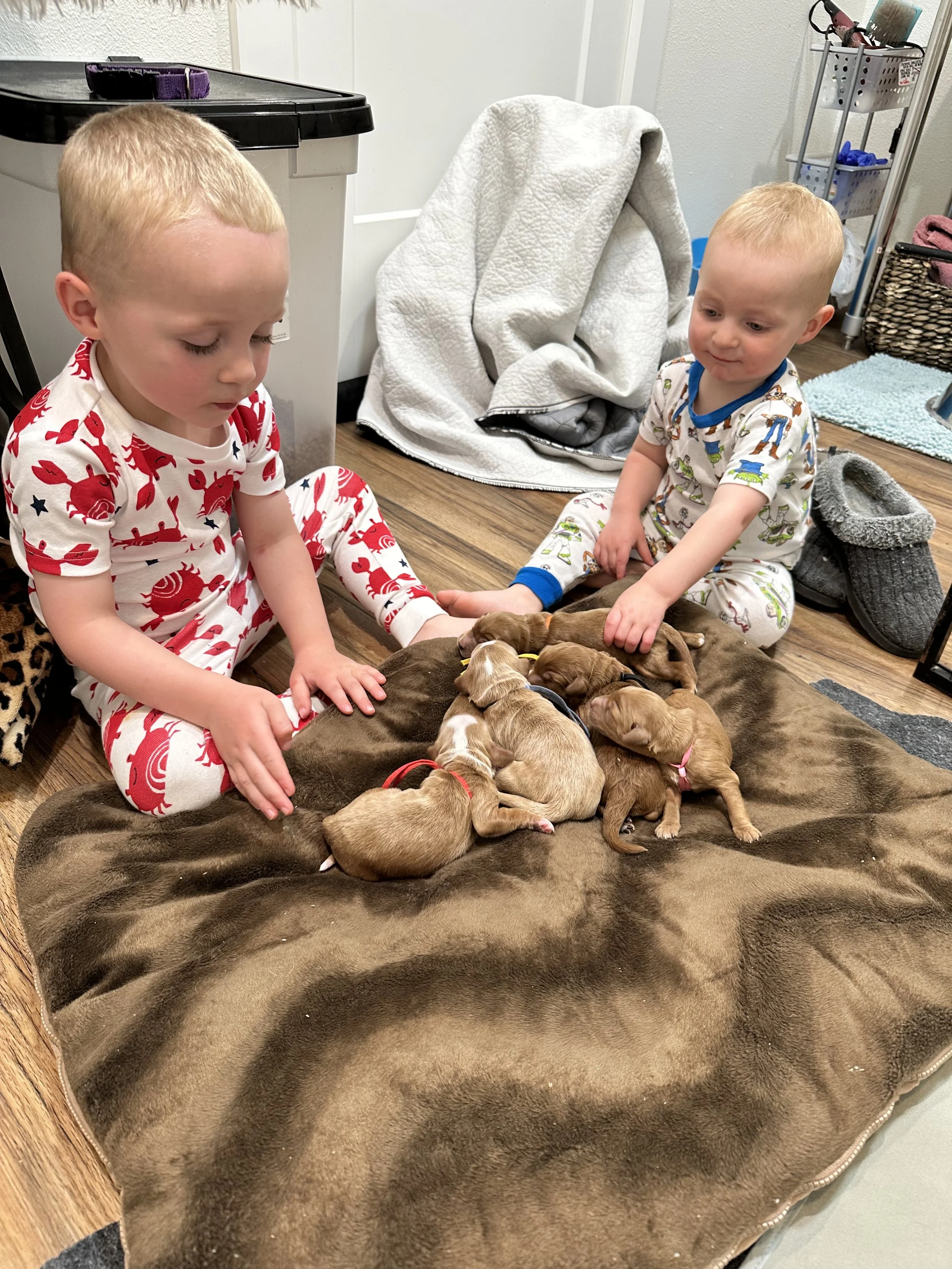
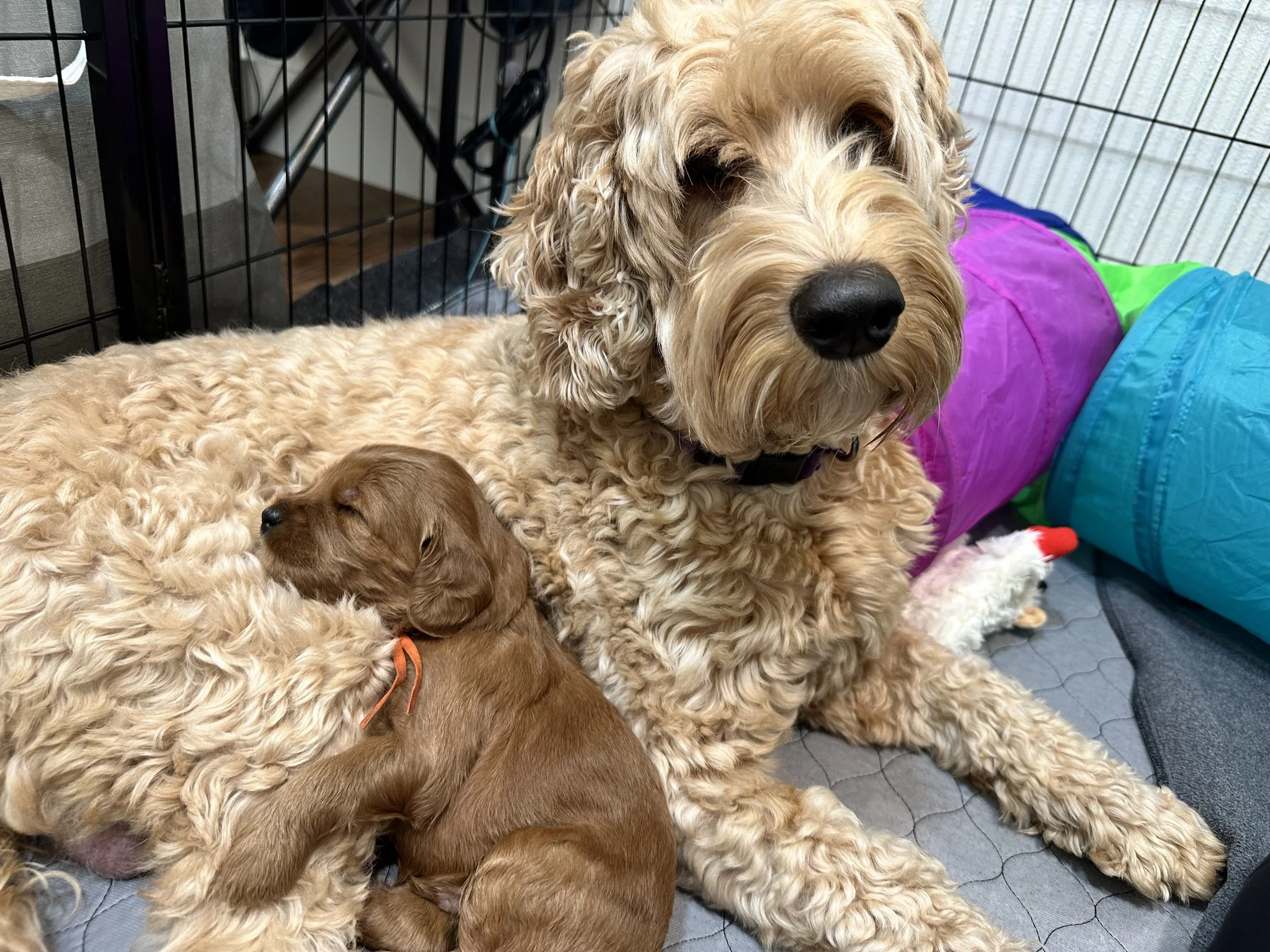
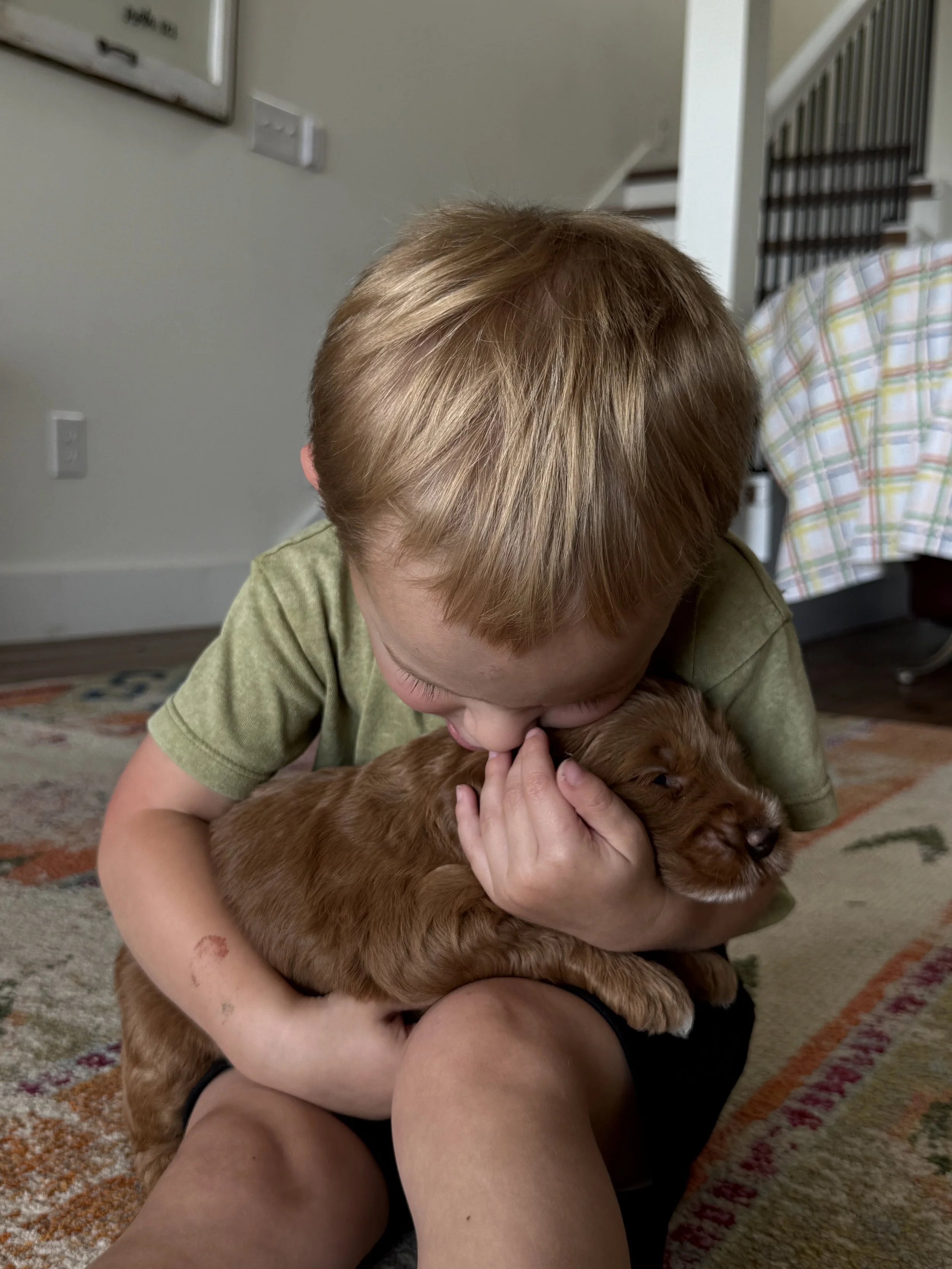
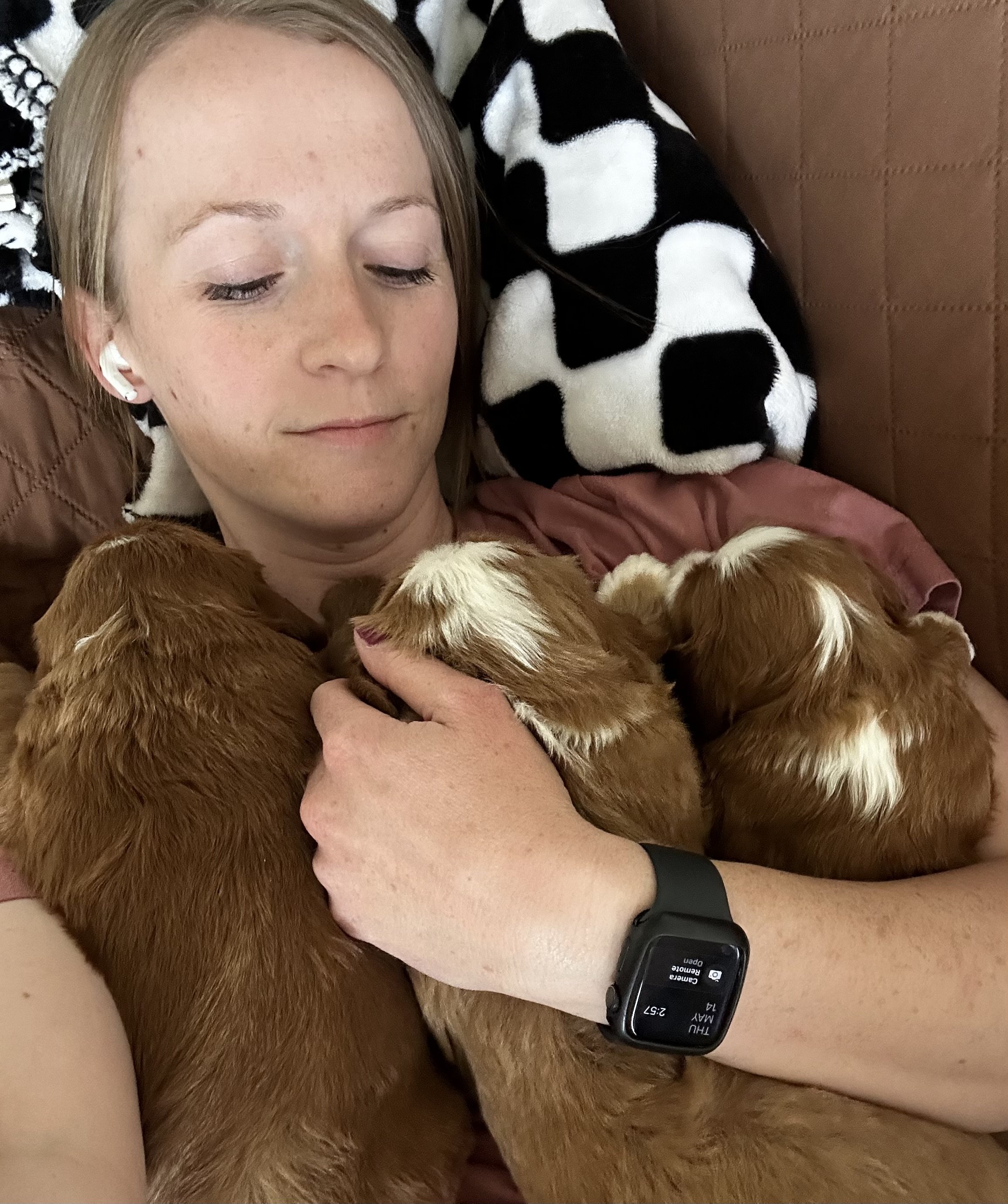
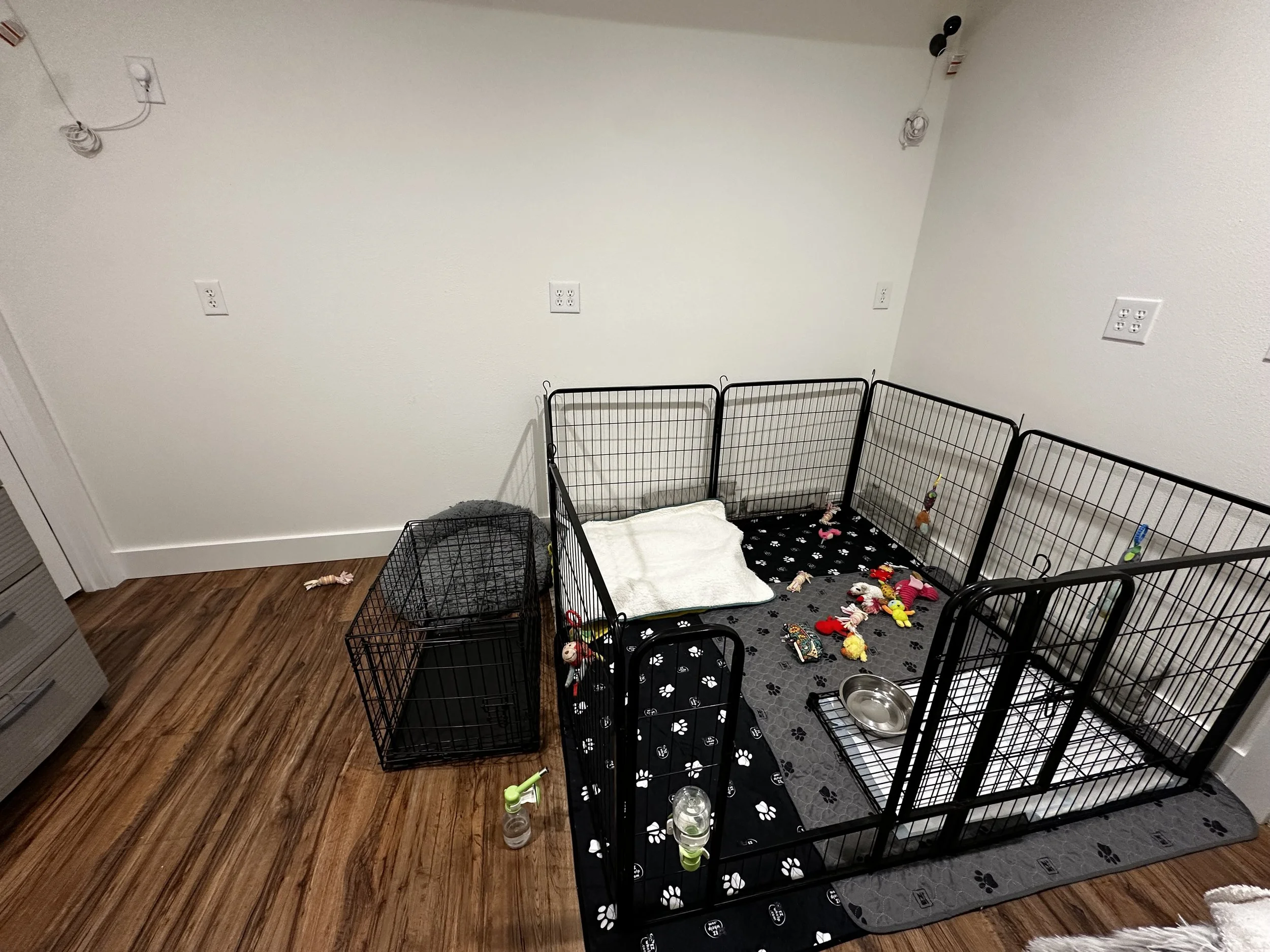
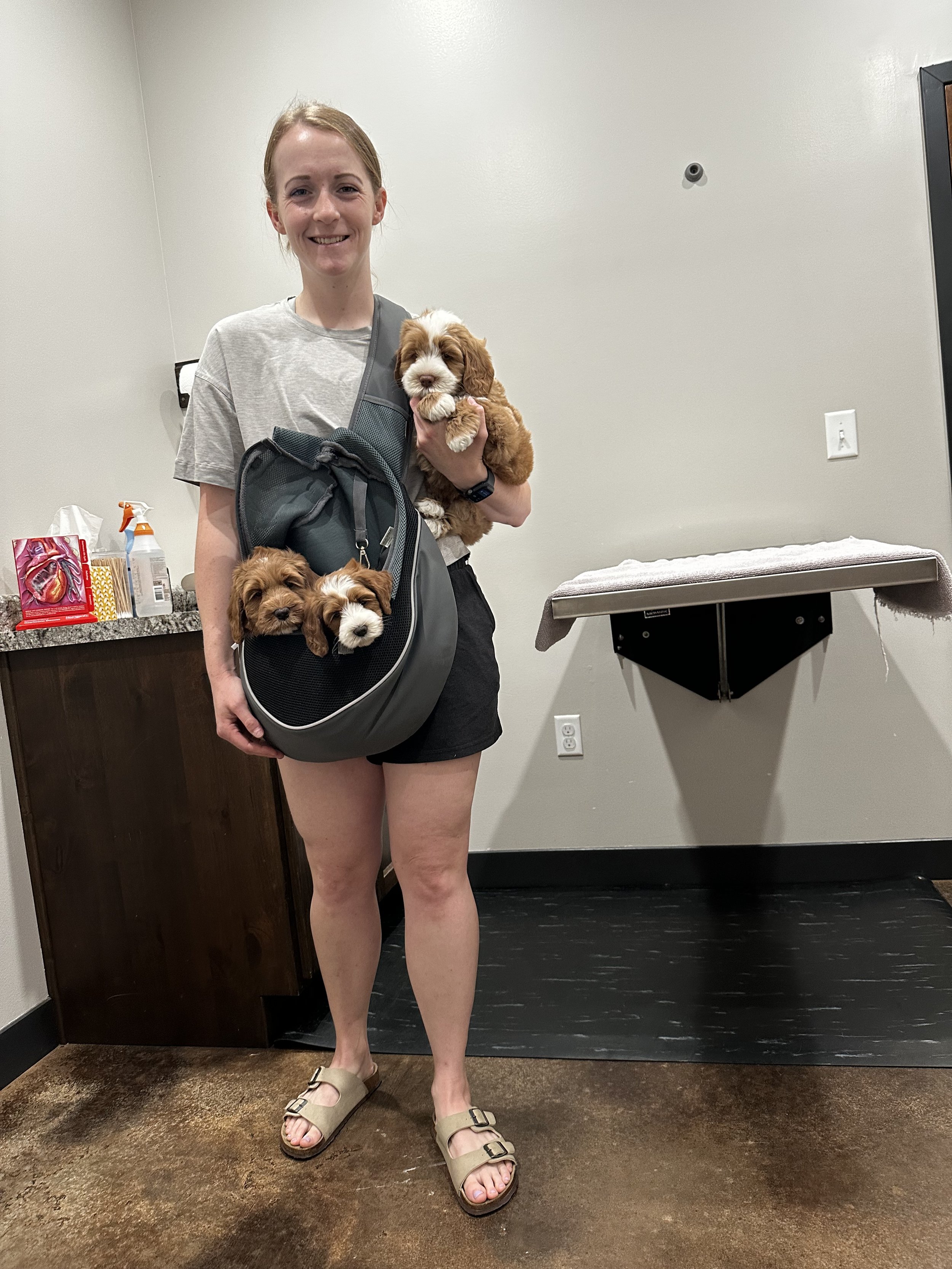
Our puppies are not raised in a separate building or a dedicated whelping facility away from daily life. From their first breath, they are part of our household.
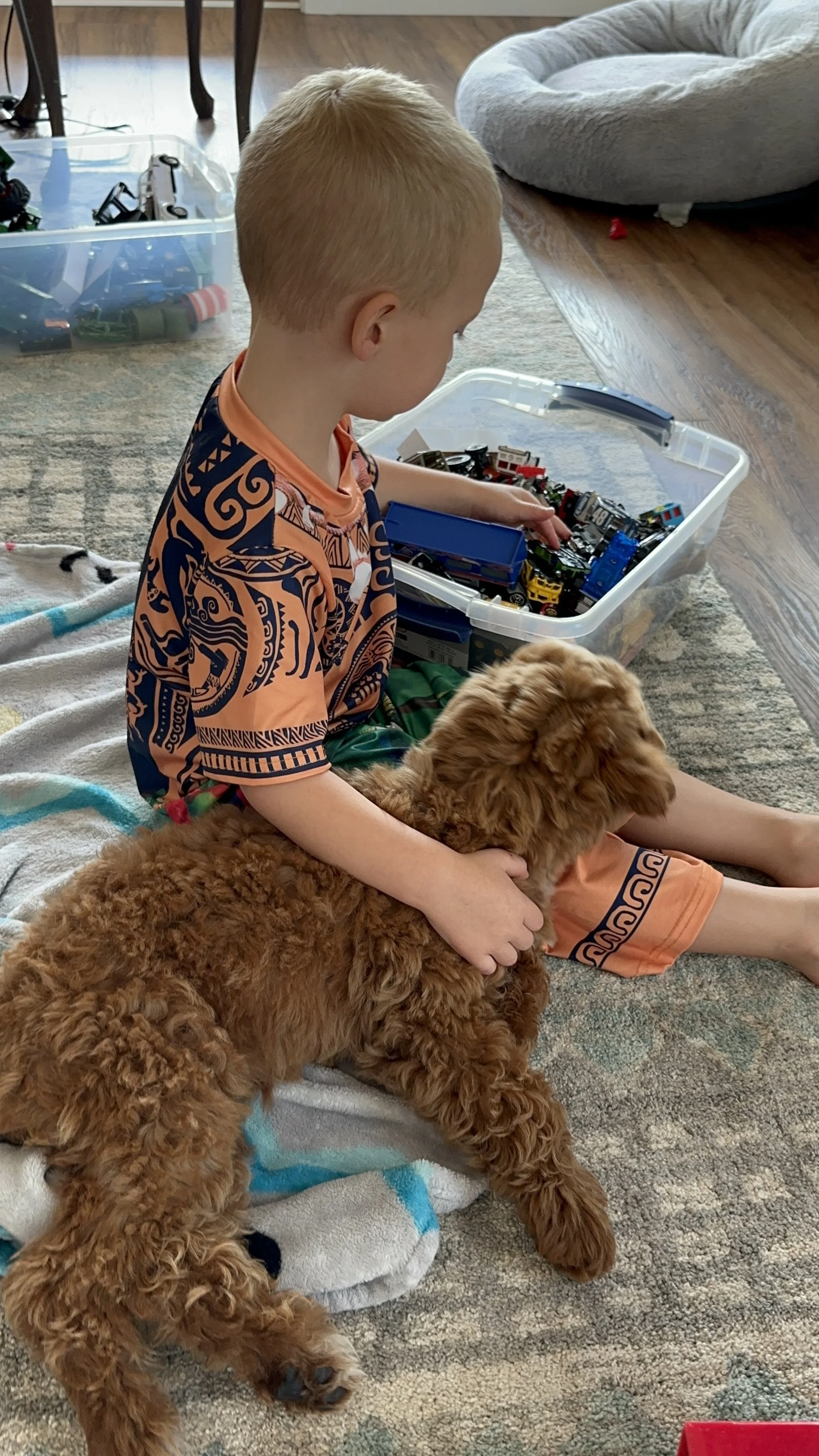
They grow up hearing the dishwasher run, music playing from another room, kids coming home from school, and the back door opening and closing throughout the day. They navigate carpet, hardwood, and tile. They see and hear a running vacuum. They fall asleep near the sounds of a family living normally around them.
This kind of immersion is not something you can replicate with scheduled socialization visits a few times a week. It happens constantly, organically, and it produces puppies that are genuinely calm because calm is simply all they have ever known. By the time your puppy comes home, ordinary household activity is not surprising to them. It is just life.





Early Neurological Stimulation:
Days 3 Through 16
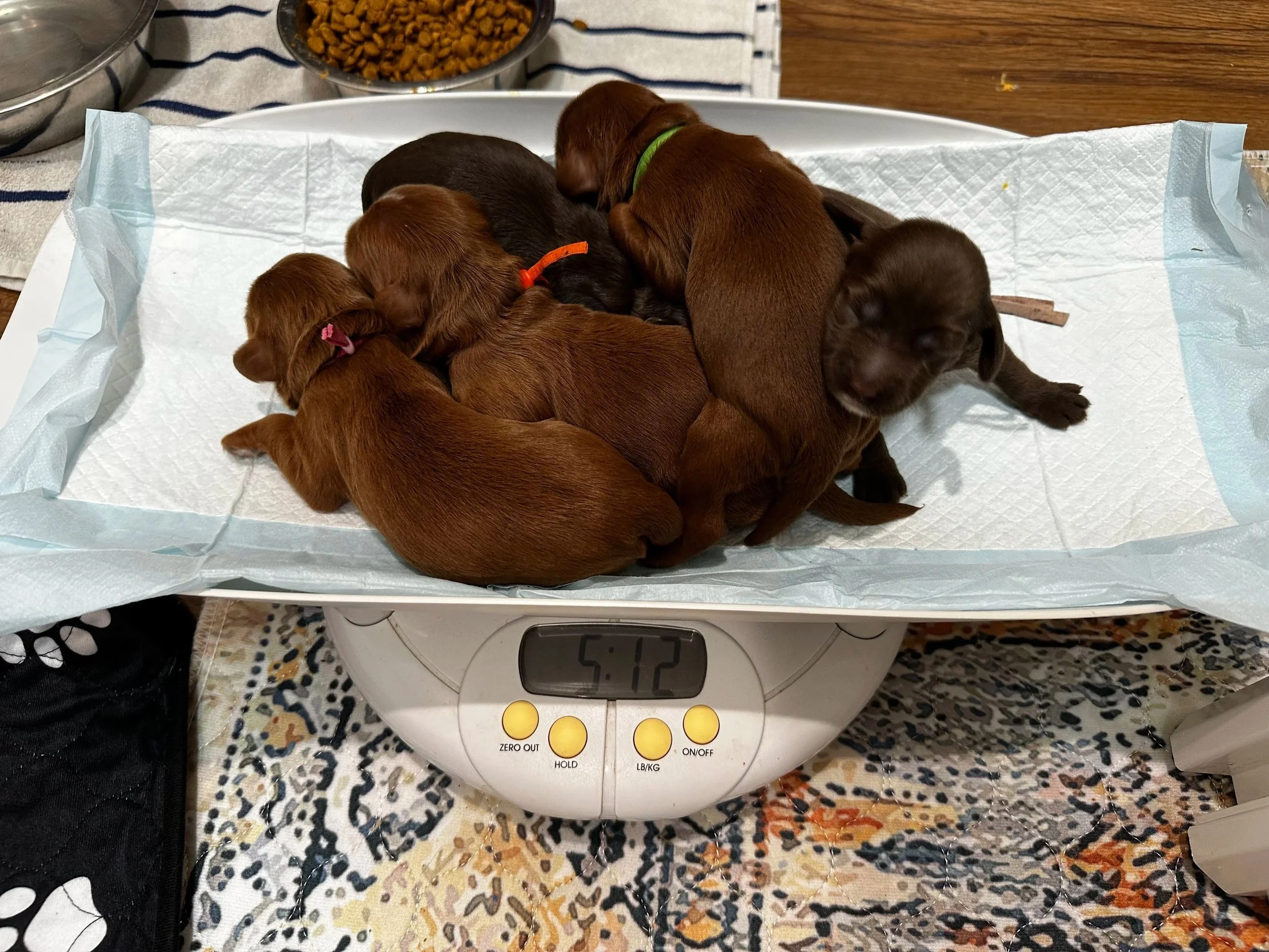
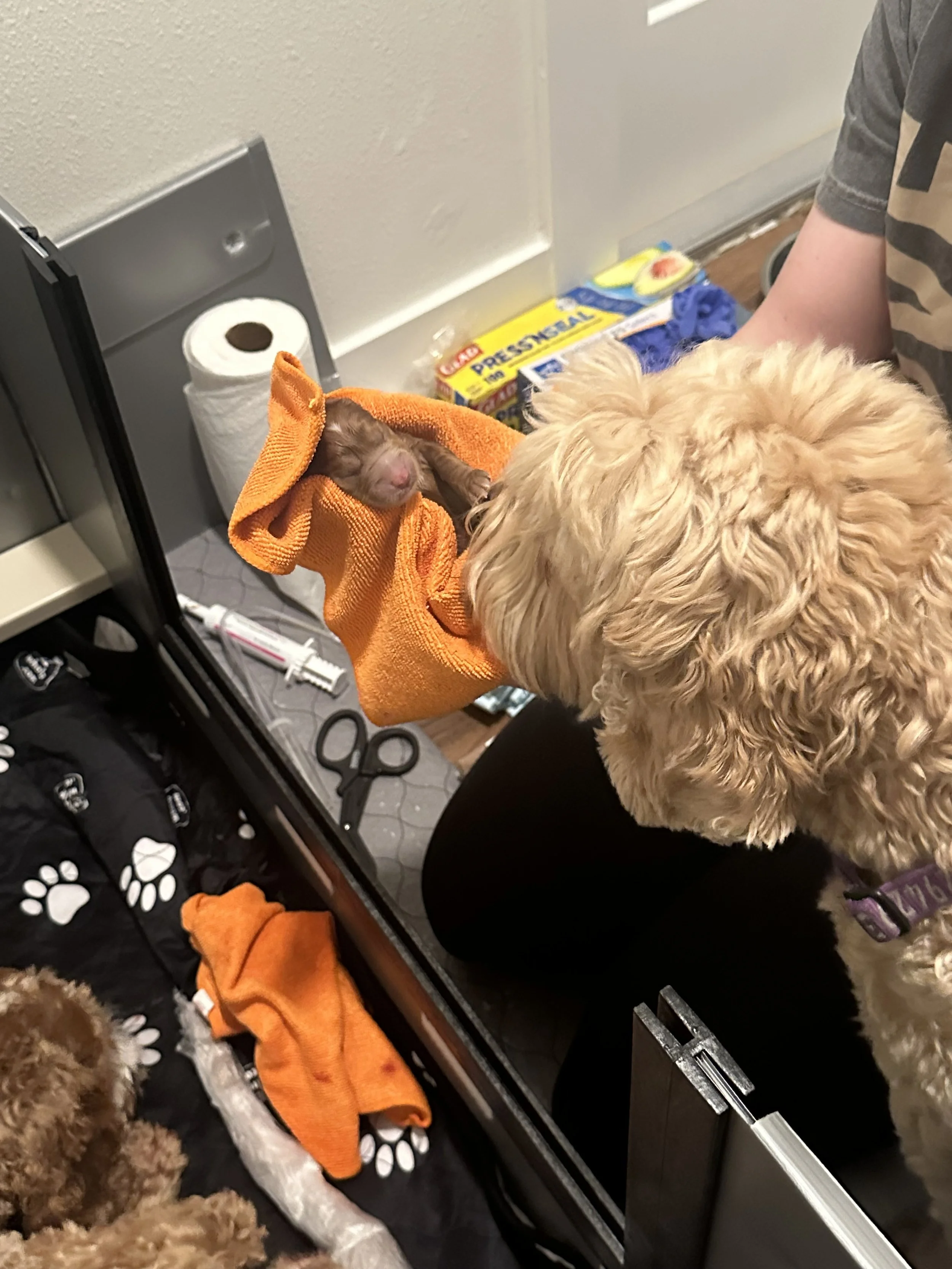
Before a puppy's eyes open, before it can walk, and before it knows anything about the world, we begin Early Neurological Stimulation.
ENS is a research-backed protocol originally developed for military working dogs that has since been adopted by thoughtful breeders for the measurable impact it has on neurological development.
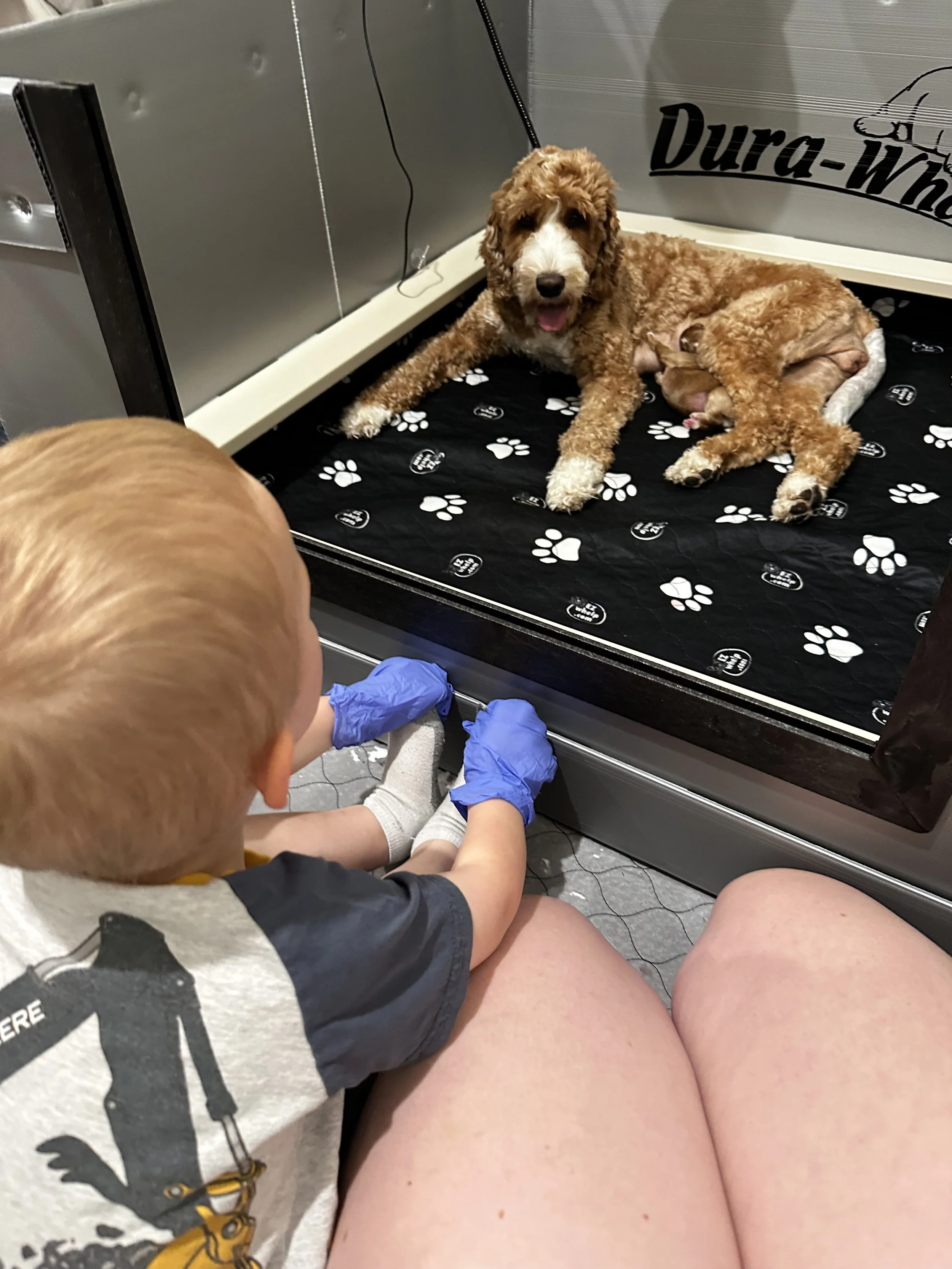
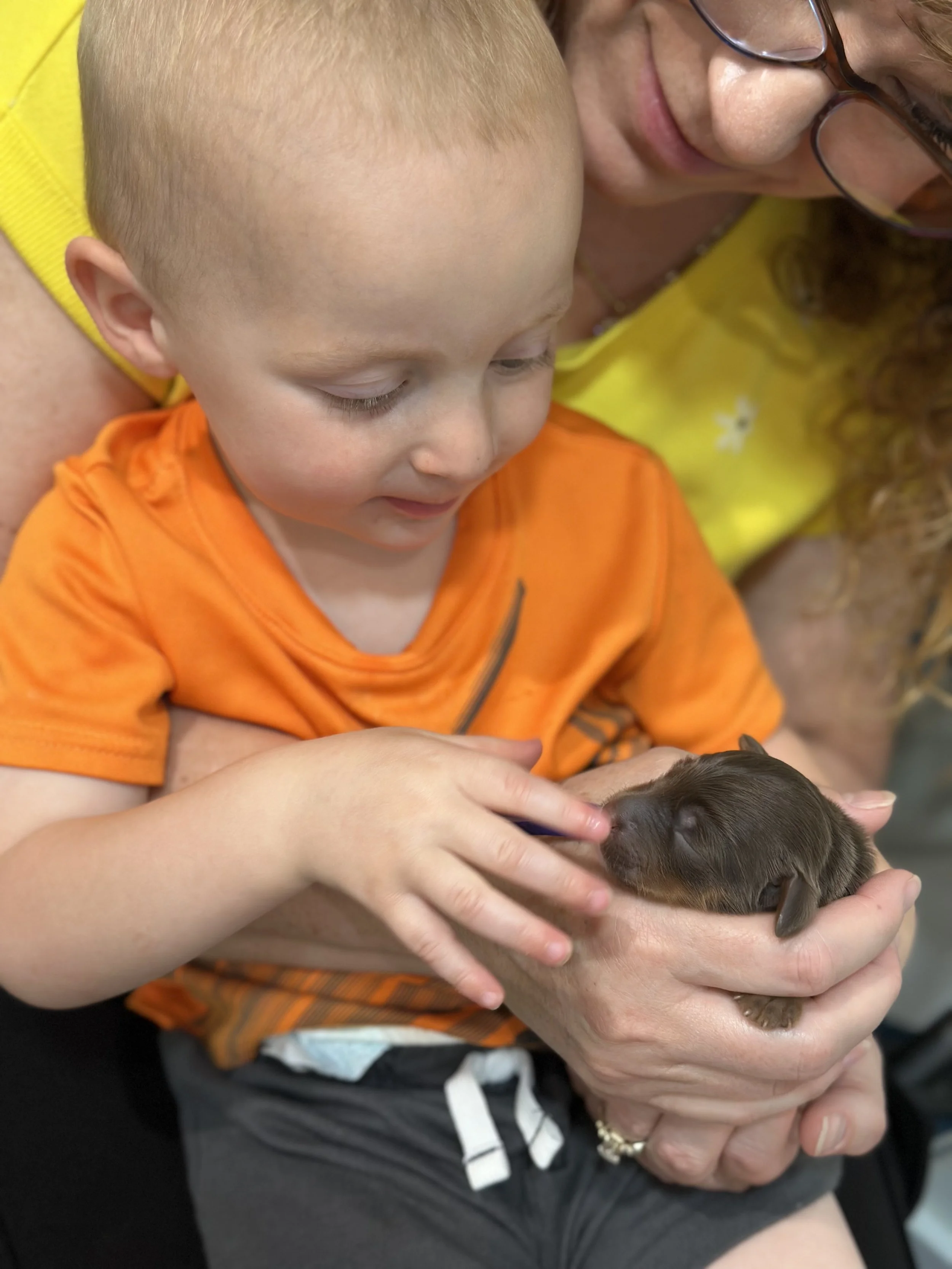
Starting on day 3 and continuing through day 16, each puppy receives five brief, specific exercises once per day:
Tactile stimulation: gentle stimulation between the toes using a cotton swab
Head held erect: the puppy is held vertically, head up, for three to five seconds
Head pointed down: the puppy is held vertically, head down, for three to five seconds
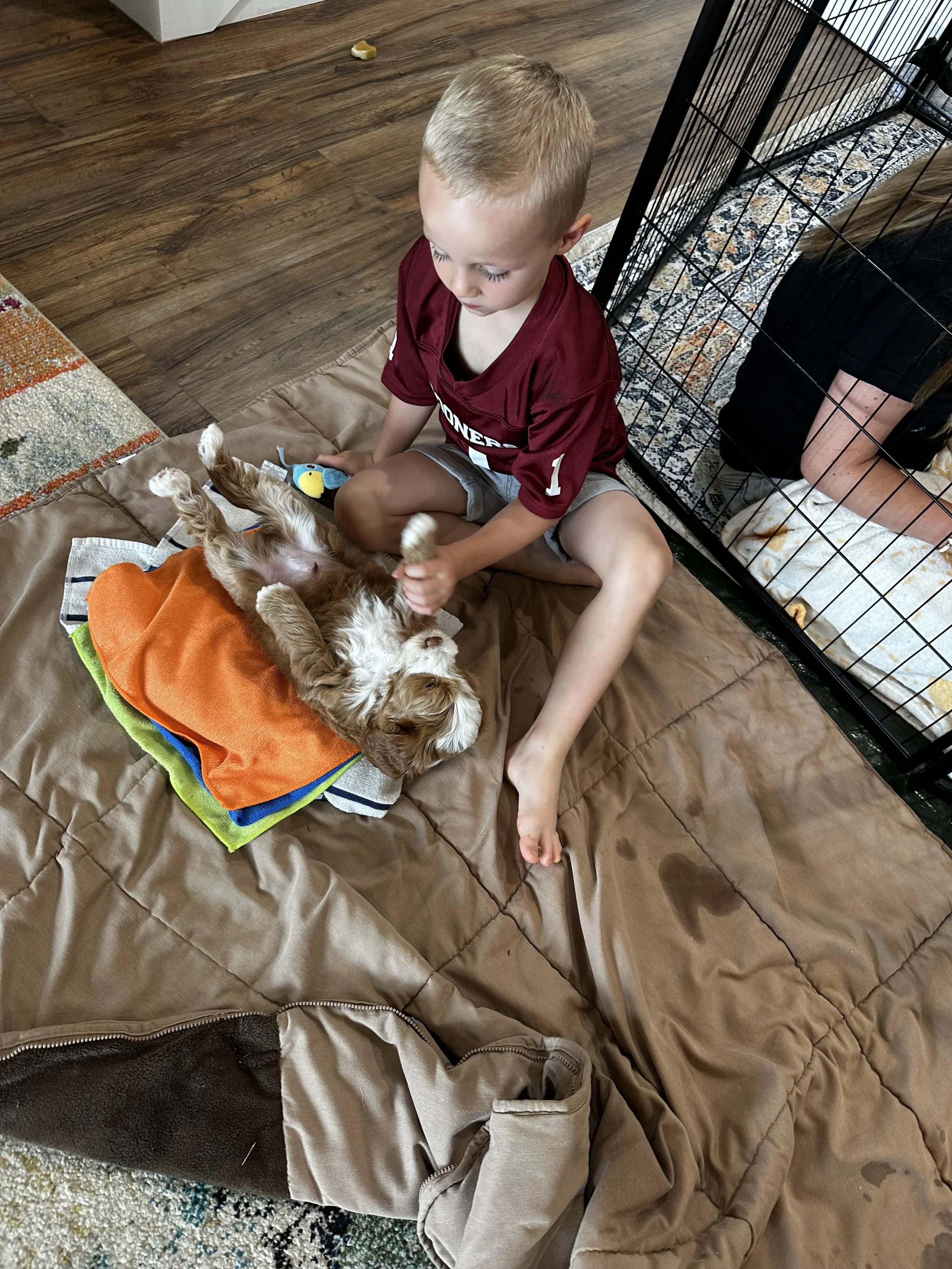
Supine position: the puppy is cradled on its back in both hands for three to five seconds
Thermal stimulation: the puppy is placed briefly on a cool, damp towel for three to five seconds
Each exercise takes only seconds. The cumulative effect over those two weeks is significant. Research on ENS-raised puppies consistently shows stronger cardiovascular performance, greater stress tolerance, improved adrenal function, and better resistance to disease. In practical terms: ENS puppies tend to approach new experiences with curiosity rather than anxiety. They recover faster when something startles them. They are more stable.
That is the dog we are working toward from day three of their lives.
Socialization
Weeks 3 Through 7
Once eyes and ears are open, the socialization window begins in earnest. This is one of the most critical developmental periods for any dog, and we treat it that way.
People of all ages
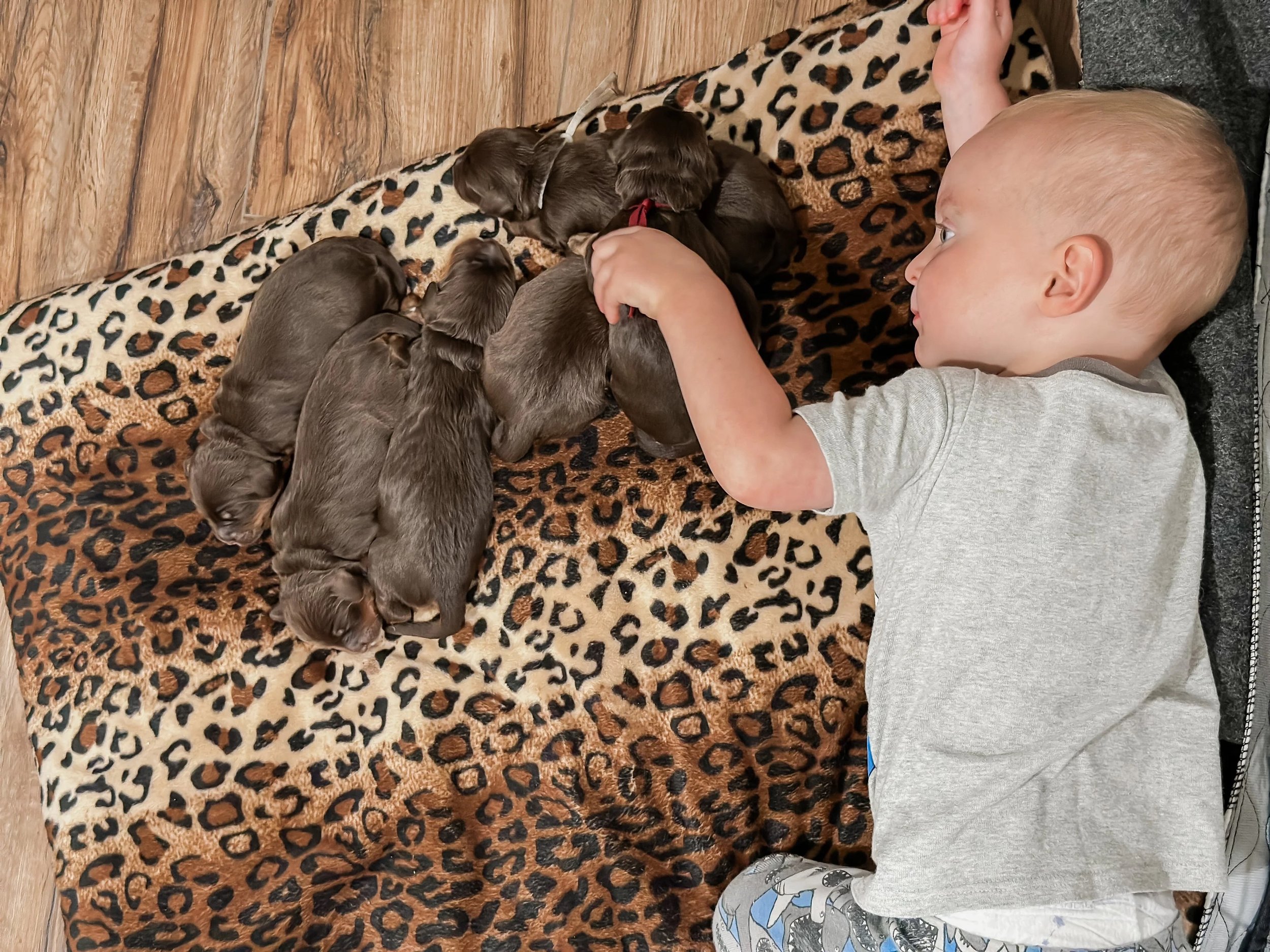
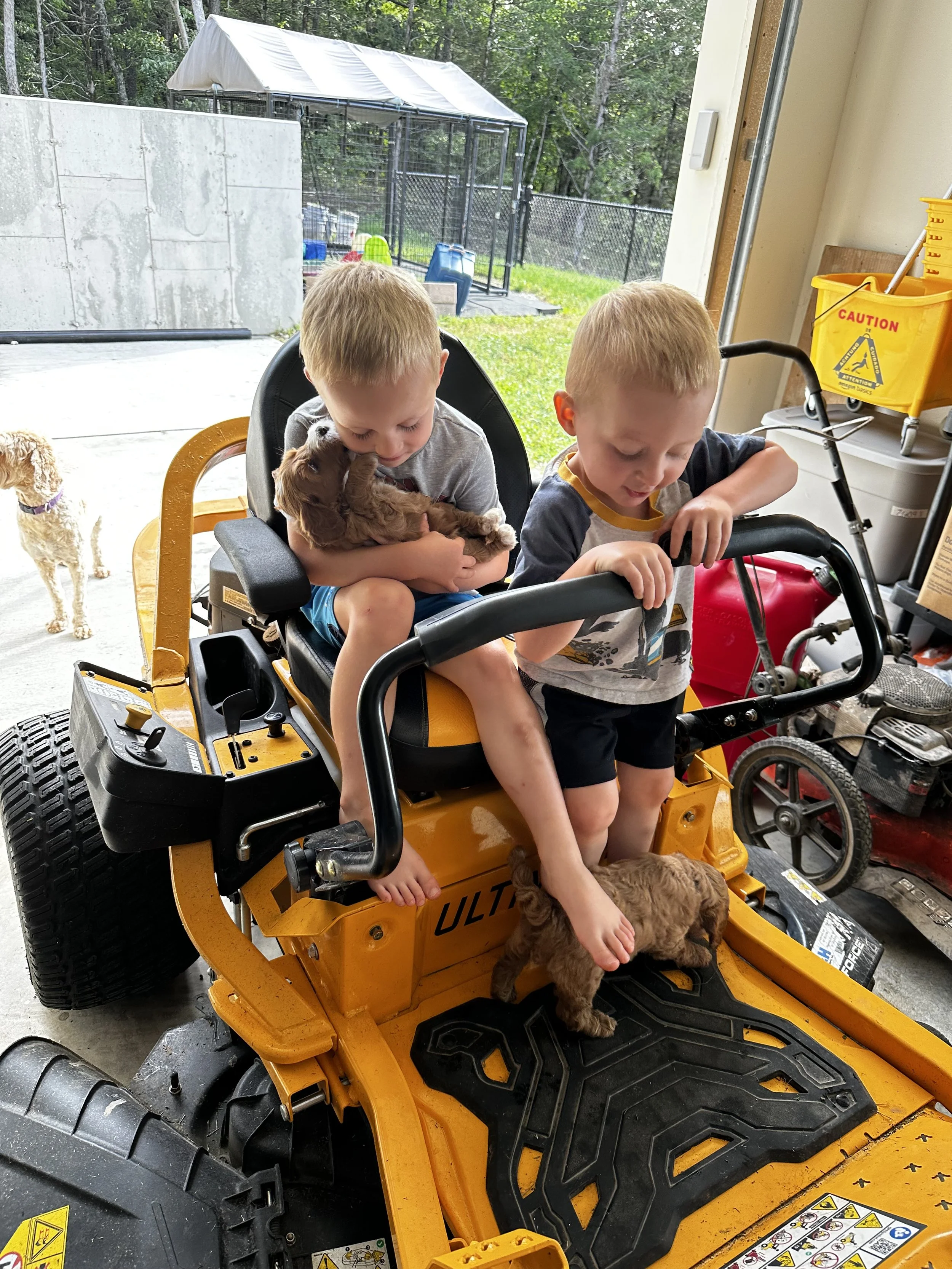
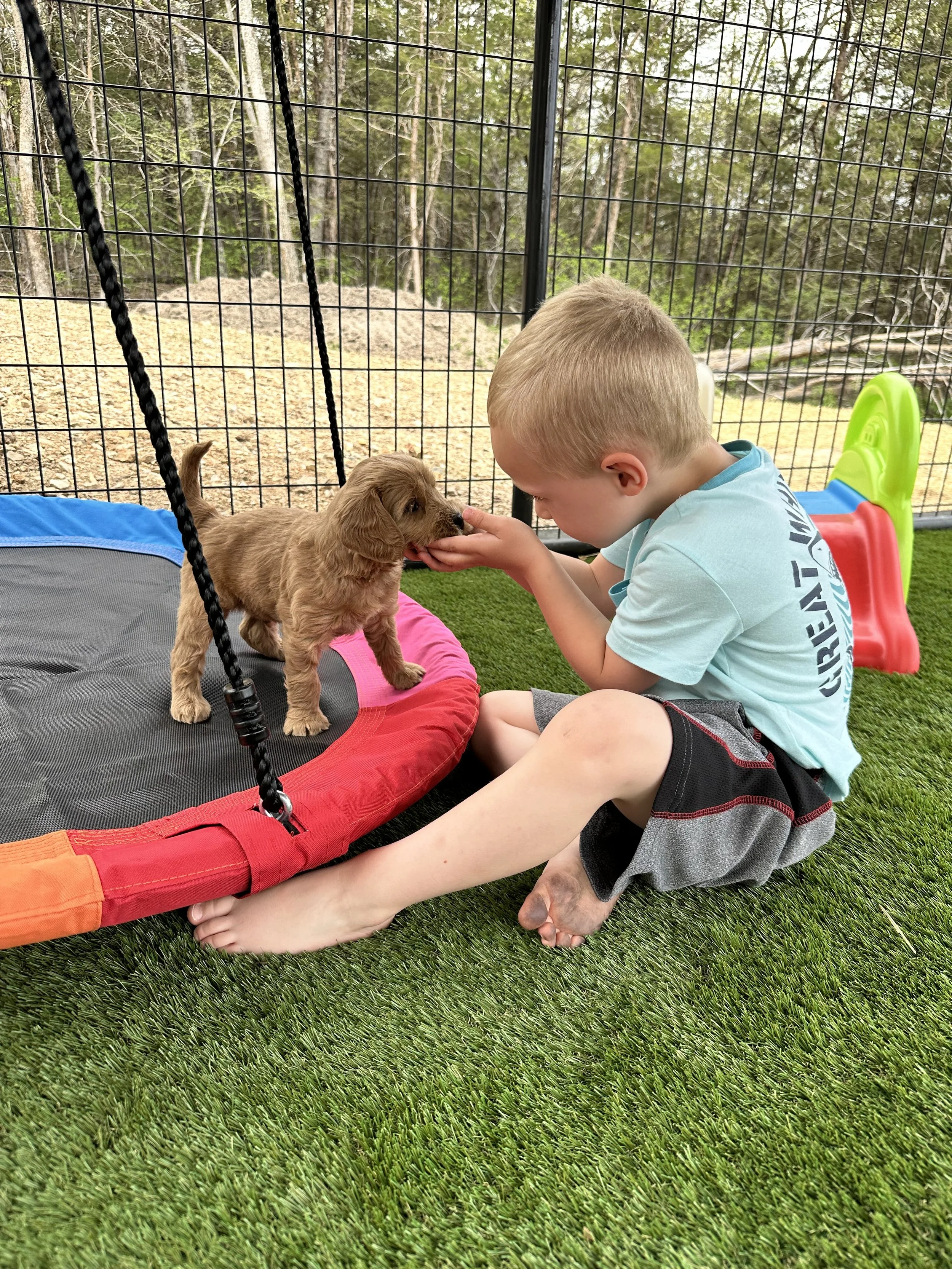
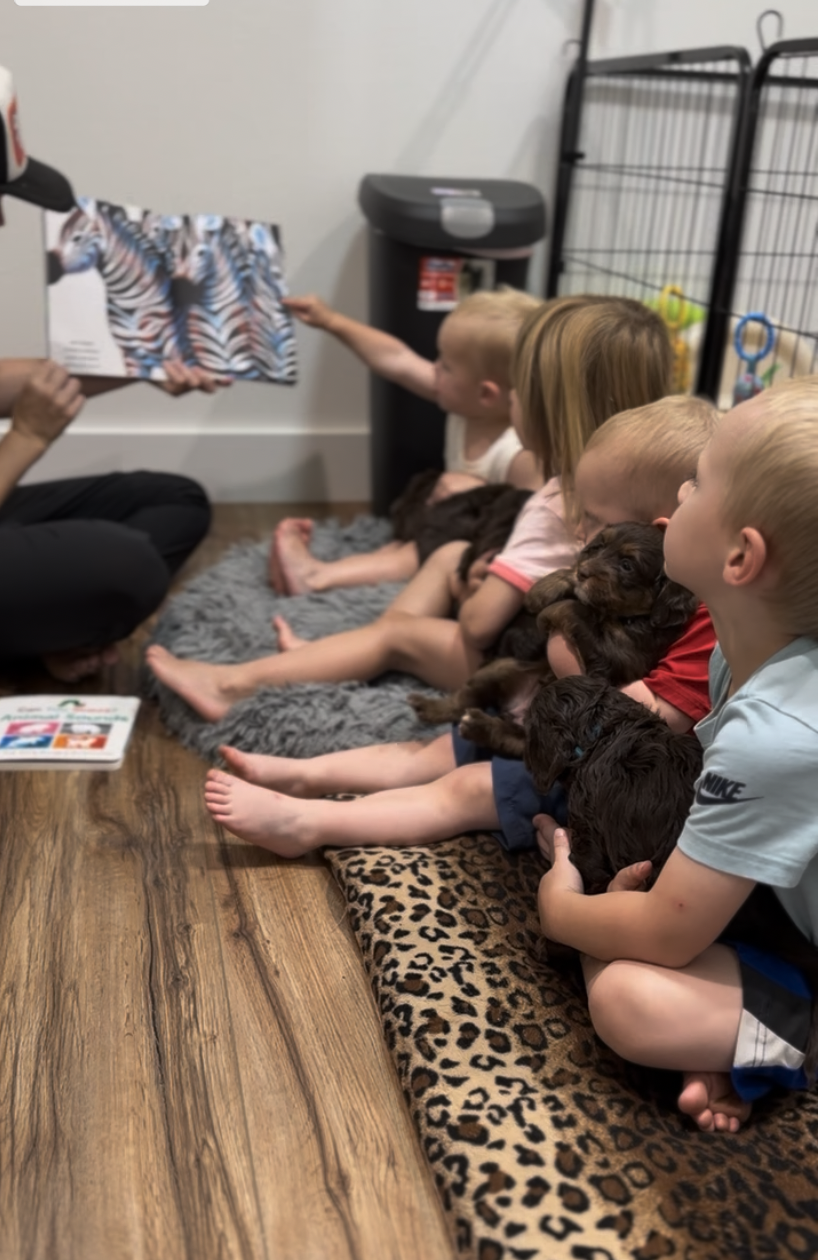
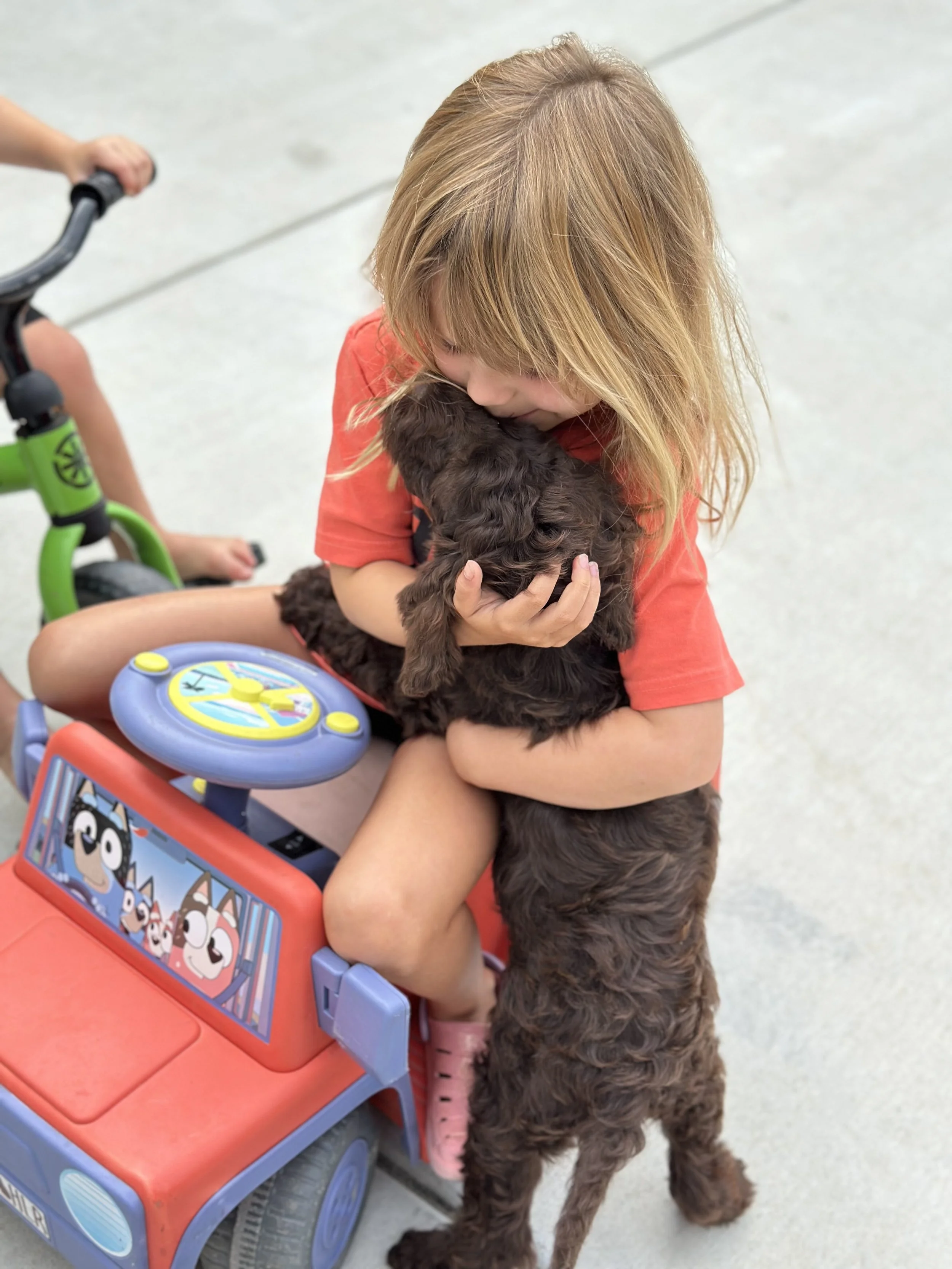
Our puppies are handled by multiple people throughout each week, not just by us. Visitors, children, and family members of all ages are part of the plan. Each puppy learns early that unfamiliar people are completely normal and safe.
Sounds
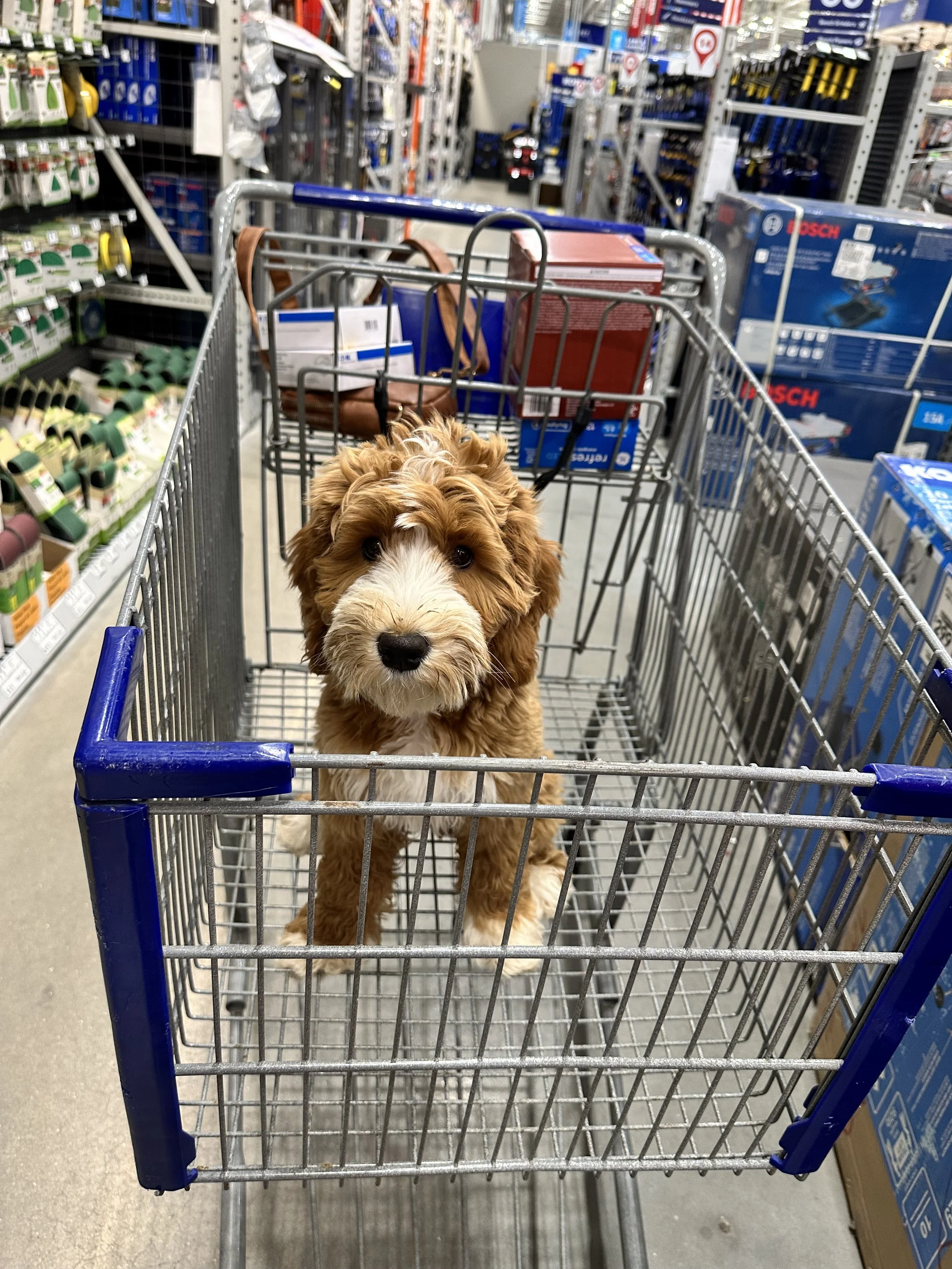
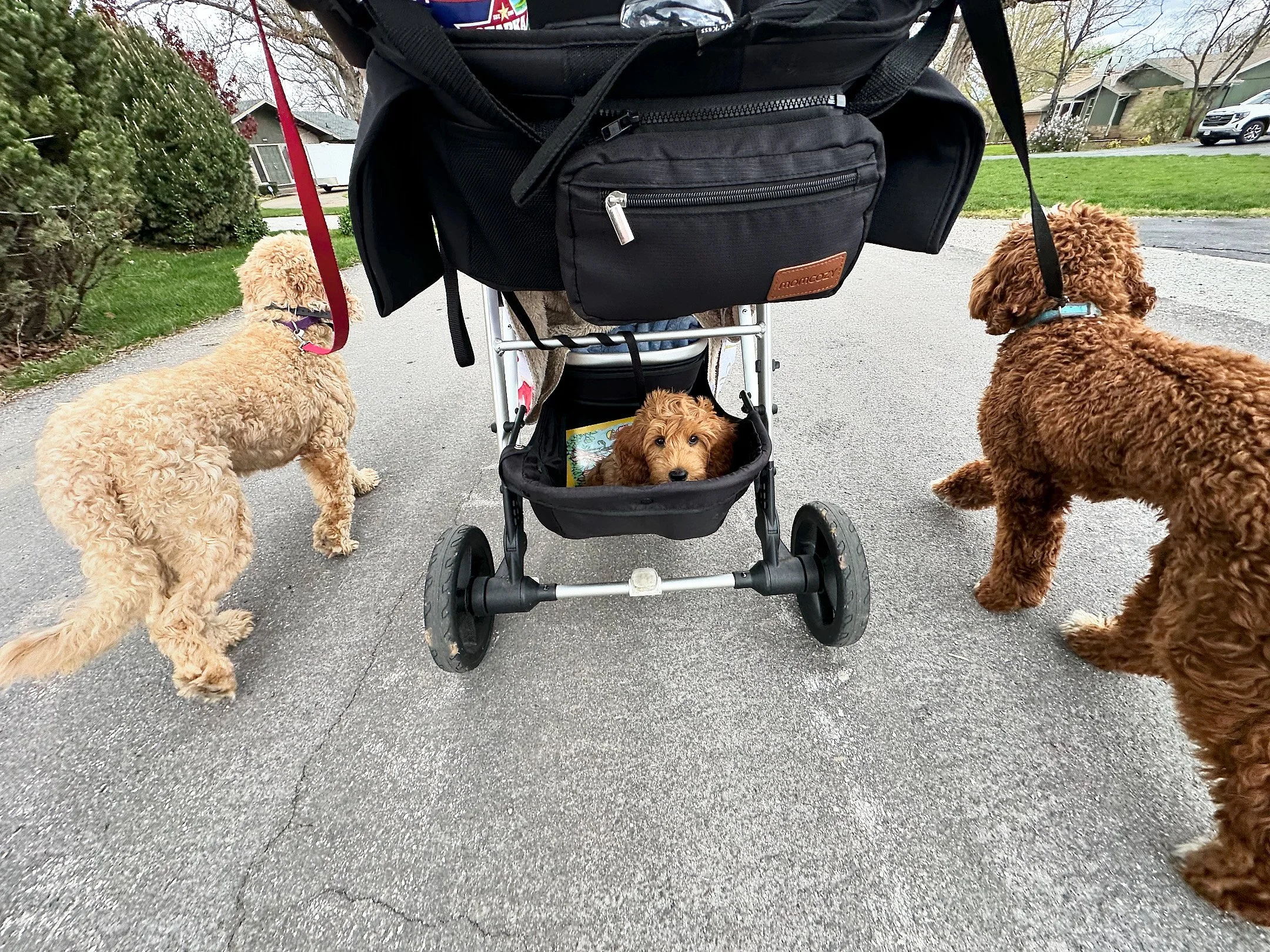
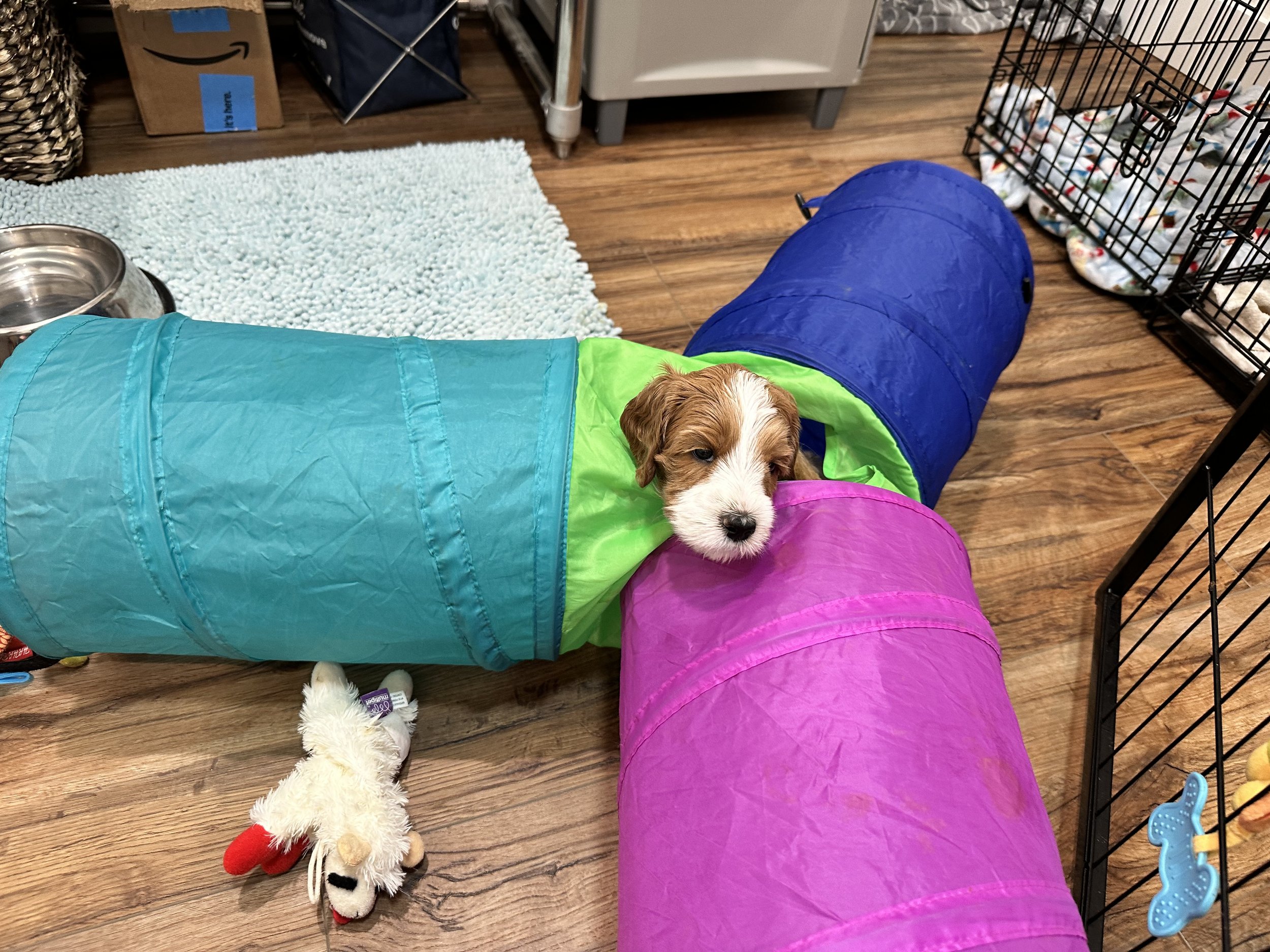
We intentionally expose our puppies to a wide range of everyday sounds during this window: vacuums, blenders, music, televisions at various volumes, outdoor traffic, and recorded thunderstorms. None of these are introduced abruptly. The goal is relaxed familiarity, not endurance.
Surfaces and textures
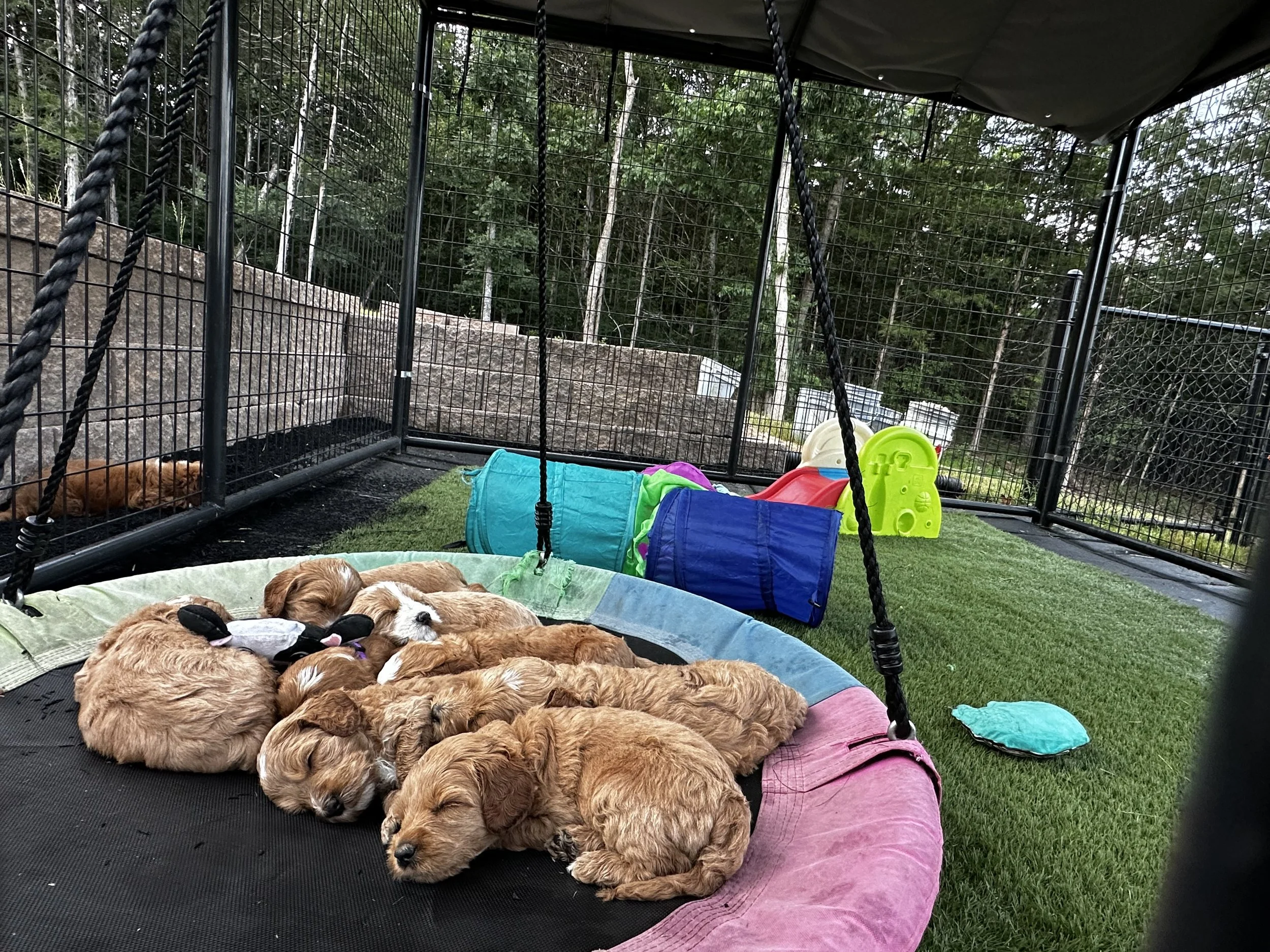
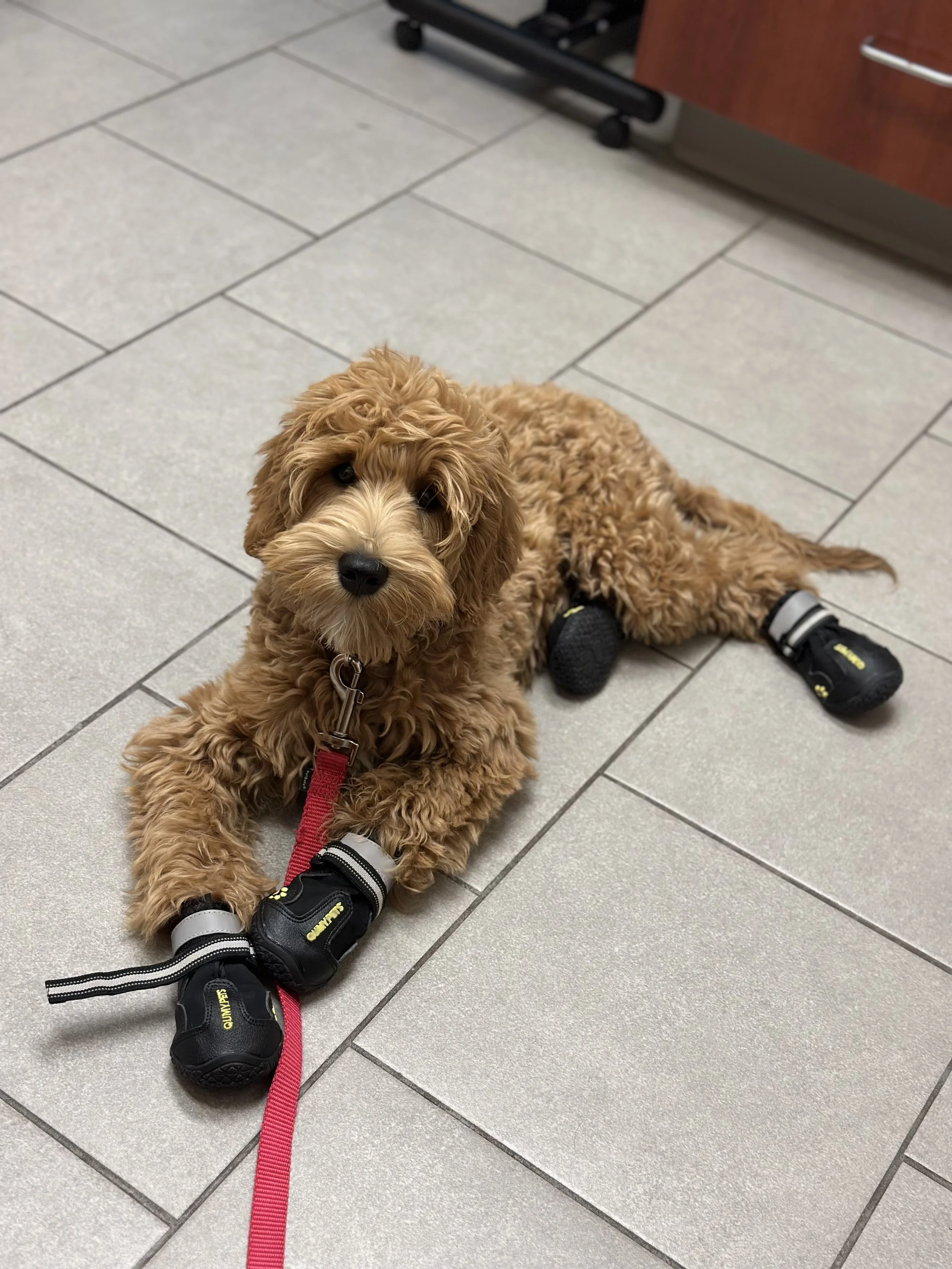
Puppies explore multiple floor surfaces during this period, including carpet, hardwood, tile, grass, gravel, and textured mats. Different surfaces challenge balance and coordination in small ways that build confidence without overwhelming.
Handling and grooming introduction
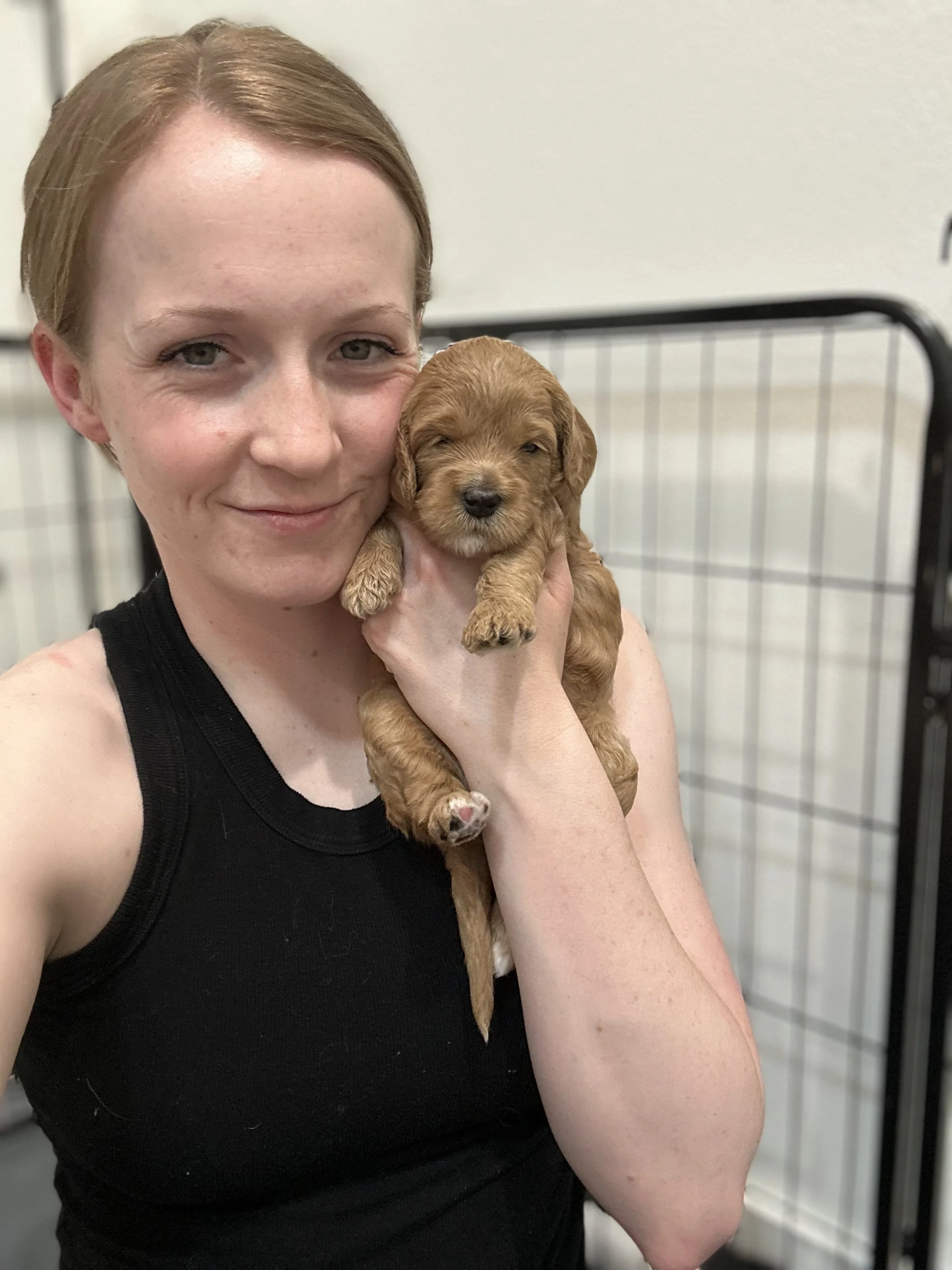
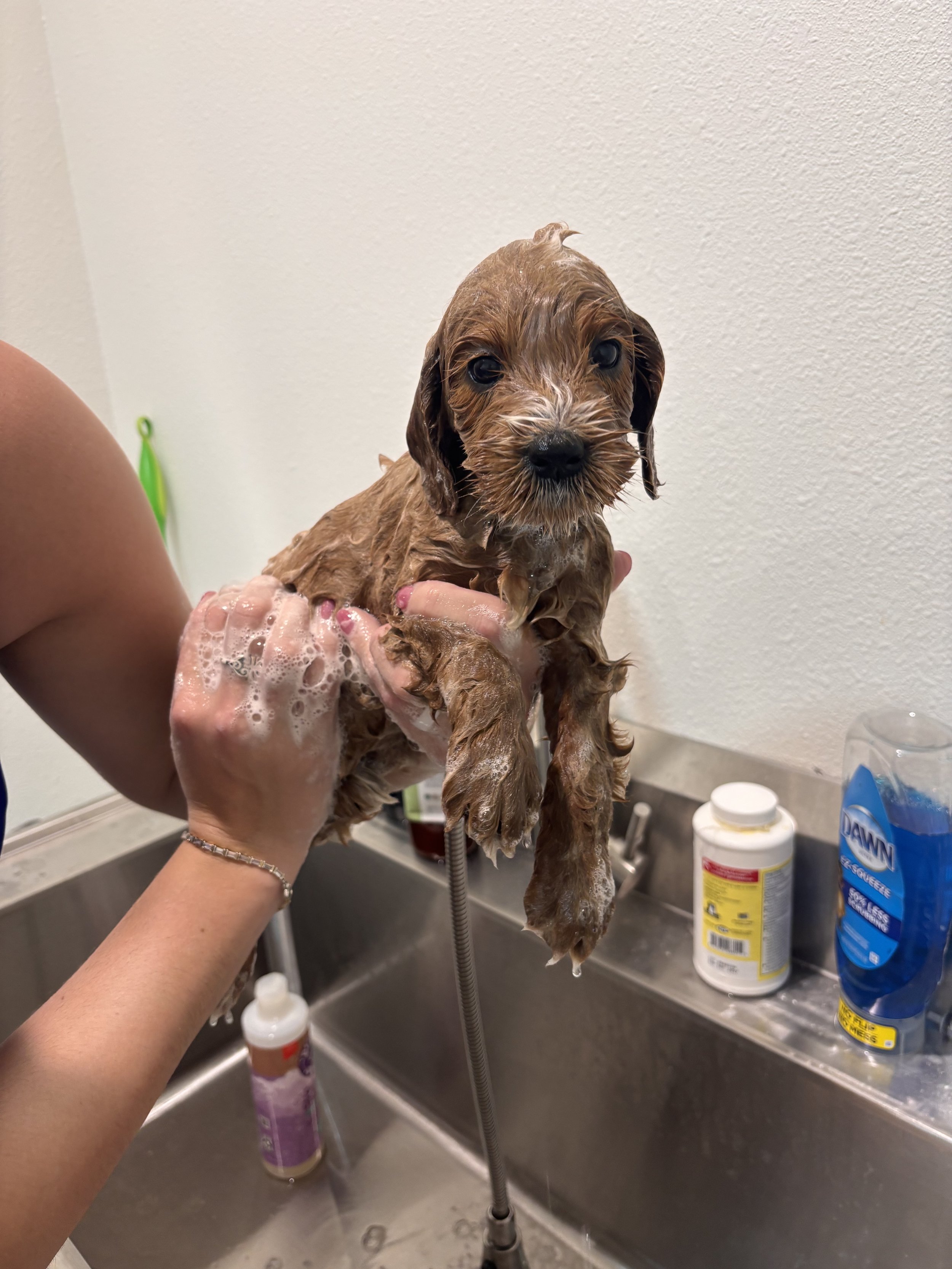
Every puppy has their ears touched, paws held and gently manipulated, muzzle handled, and coat brushed repeatedly throughout this period. We introduce the sounds and sensations of grooming tools early so that vet visits and grooming appointments are not frightening firsts when they happen later. This small investment pays dividends for the entire life of the dog.





Potty Training
Starting Before You Get Home
We do not send puppies home with no potty foundation. By the time your puppy is ready to come home at 8 weeks, they have already been introduced to the concept.
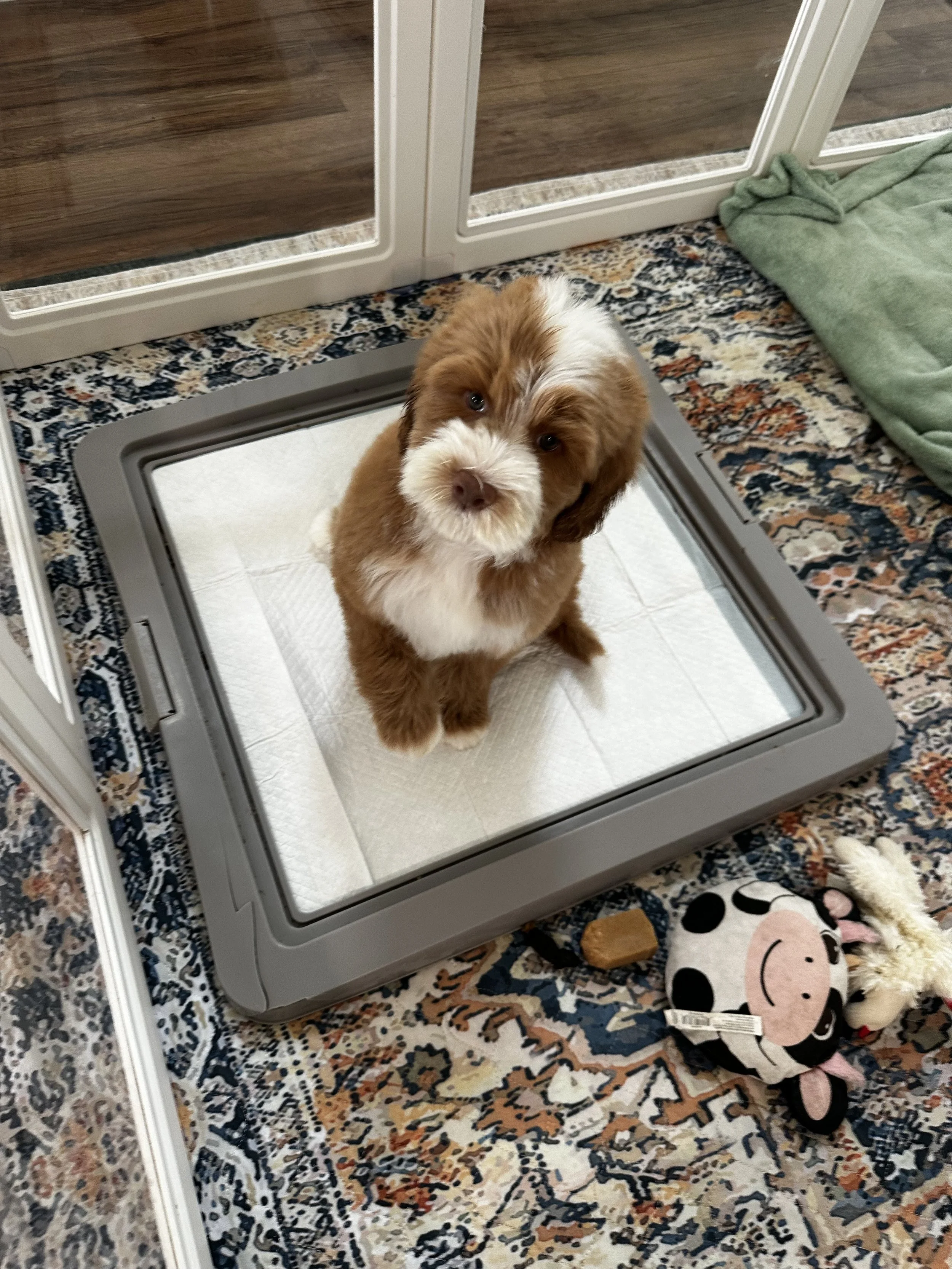
Around week 5, we begin taking puppies outside to a designated area after meals and after waking up. They are learning the association between going outside and going potty well before they join your family. They will not be reliably trained when they leave us — that continued work is yours to do — but they are not starting from scratch either.
Every family also goes home with a detailed schedule that includes specific potty intervals timed around meals, wake-up, playtime, and bedtime. That schedule is not a rough outline. It is a tested daily routine designed to give your puppy the maximum number of opportunities to succeed and minimize accidents in your home from day one.
Crate Training
Building the Right Association Early
Crate training is one of the most valuable things you can do for your puppy, and we give you a head start.
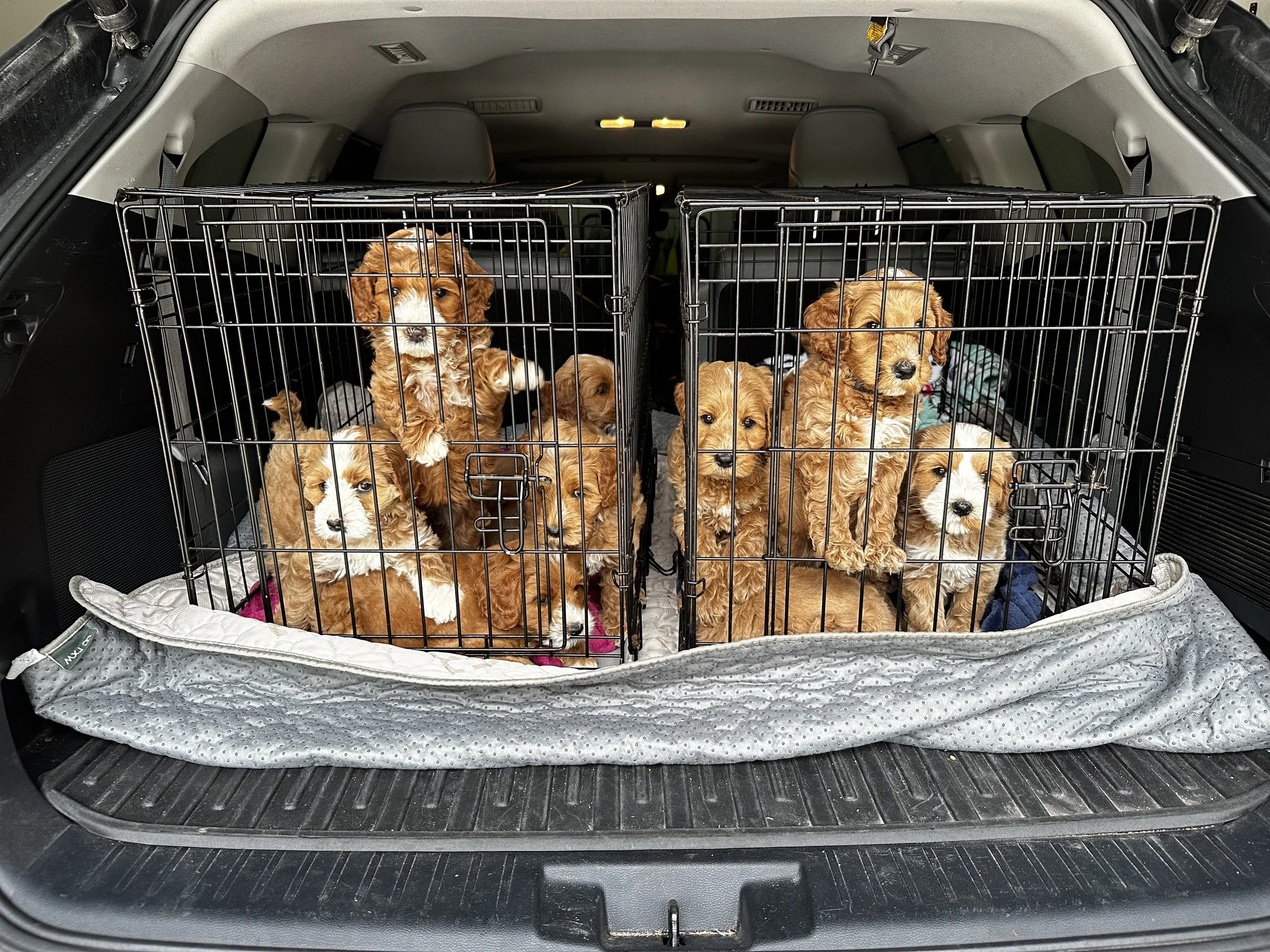
Starting around week 6, puppies are introduced to crate time in a calm, positive way. They learn that the crate is a comfortable, safe space, not a consequence. By the time you pick them up, they have already had several experiences settling quietly in a crate on their own, which makes the transition to your home meaningfully smoother.
Your go-home packet includes crate training guidance and specific tips for the first few nights, including how to handle early protest without accidentally reinforcing it. That one distinction — knowing when to respond and when to wait — is often the difference between a puppy that loves their crate within two weeks and one that fights it for months.
Temperament Assessment
and Matching
Not every puppy is right for every family, and part of our job is knowing the difference.
By week 6, each puppy in the litter has a personality. Some are bold — first to the food bowl, first to approach something new, unbothered by noise or movement. Others are gentler, more sensitive, more inclined to observe before engaging. Some are independent. Some want to be in your lap within thirty seconds of meeting you. These tendencies show up early, and they tend to stick.
Because our puppies are raised in our home rather than a kennel, we are not working from a single temperament test. We are working from weeks of daily observation. We see how each puppy responds to handling, how they interact with their littermates, how quickly they bounce back when something surprises them, and how they behave when they are separated briefly from the group. That ongoing picture gives us more to work with than any one-day evaluation can.
By the time families come to FaceTime selection at 7 weeks, we have a clear read on each puppy. During your appointment, we will walk you through what we have observed — not just what each puppy looks like, but how they move through the world. We use what you told us in your application about your lifestyle, your household, your experience with dogs, and what you are hoping for in a companion, and we share our honest recommendation for which puppy we think is your best match.
You make the final choice. But we want that choice to be an informed one, and we will tell you what we know.
This is one of the reasons we ask the questions we do on the application. A first-time dog owner in an apartment and an experienced family with a yard and kids are not looking for the same puppy, even if they both want an Australian Labradoodle. Getting that match right is good for the family and good for the dog.
Weeks 7 and 8
Preparing to Go Home
The final two weeks are about transition.
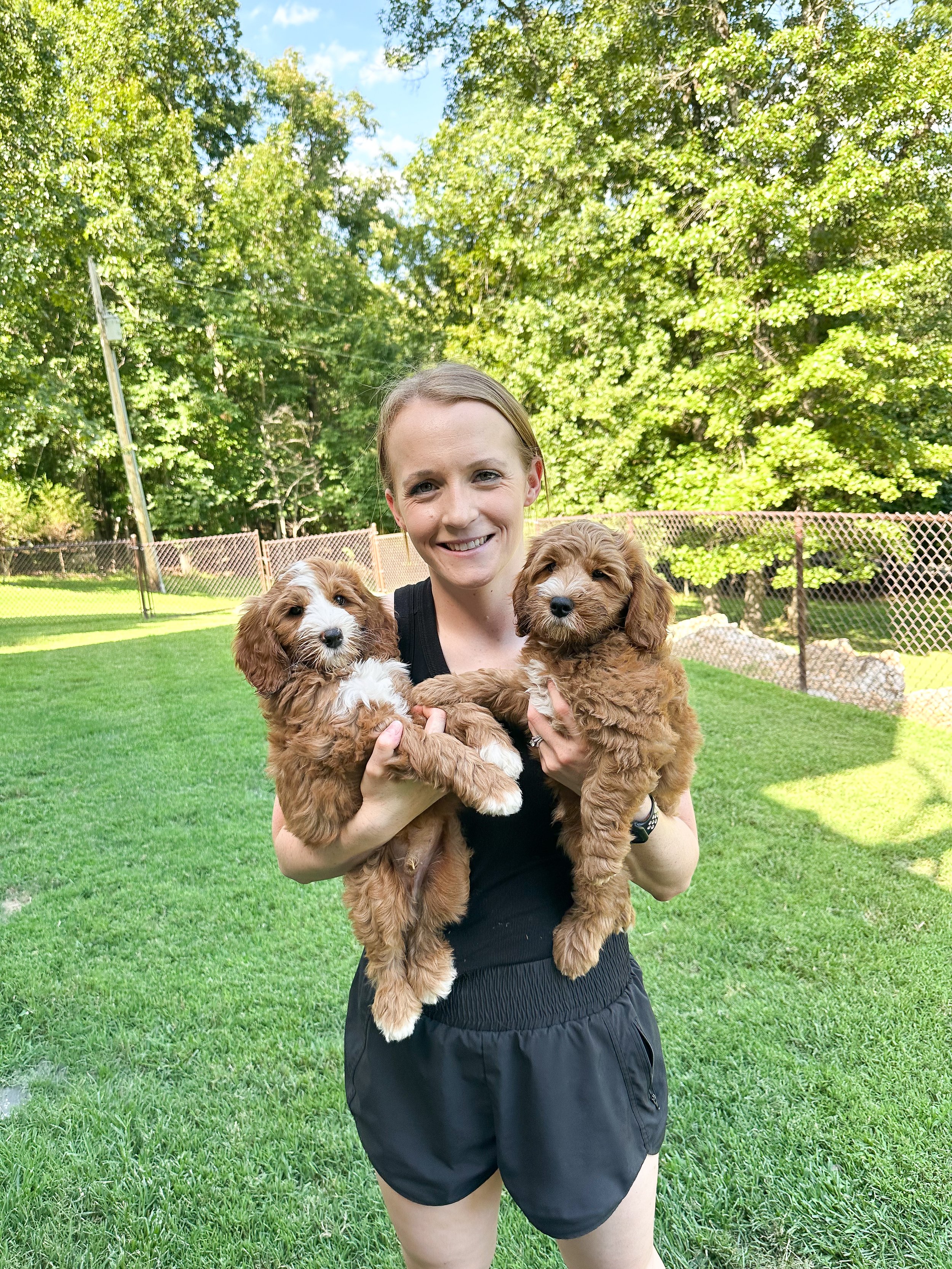
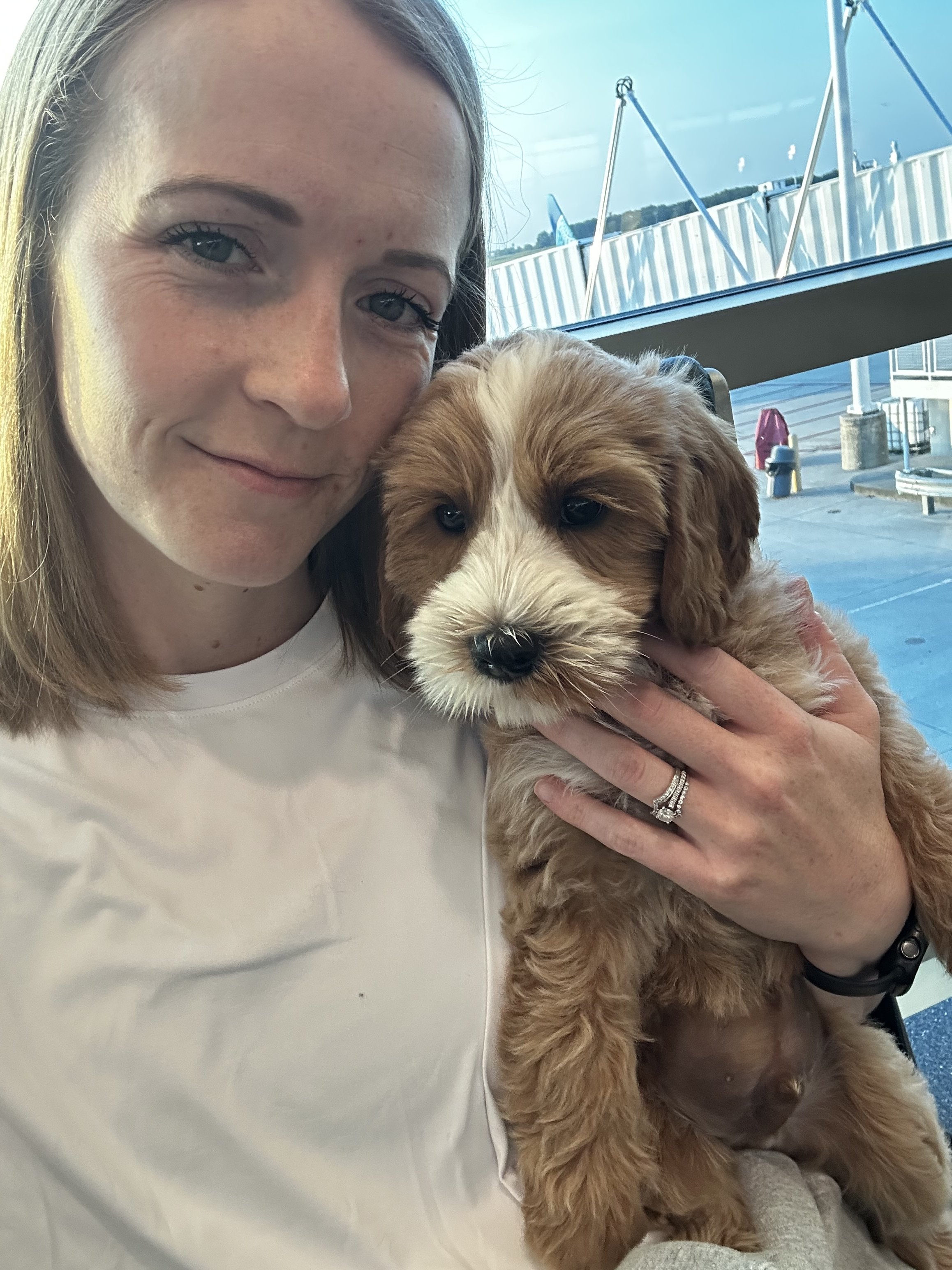
Family visits take place during weeks 7 and 8. This is your chance to meet your puppy, let them get familiar with your scent, and begin building your bond before pickup day. We encourage families to bring something with their scent on it during visits so the puppy has it nearby in the days leading up to leaving us.
On pickup day, every West Haven puppy goes home with:
Wellness exam report from a certified veterinarian
Age-appropriate vaccinations and deworming records
Registered microchip (lifetime registration fee already paid — go to buddyid.com to complete registration)
Trupanion pet insurance pre-enrollment (must be activated within 24 hours of pickup)
Copy of our two-year health guarantee contract
Two-week go-home schedule covering wake time, meals, potty intervals, crate time, play, and bedtime
A blanket for your puppy
Cheese bone or puppy toy
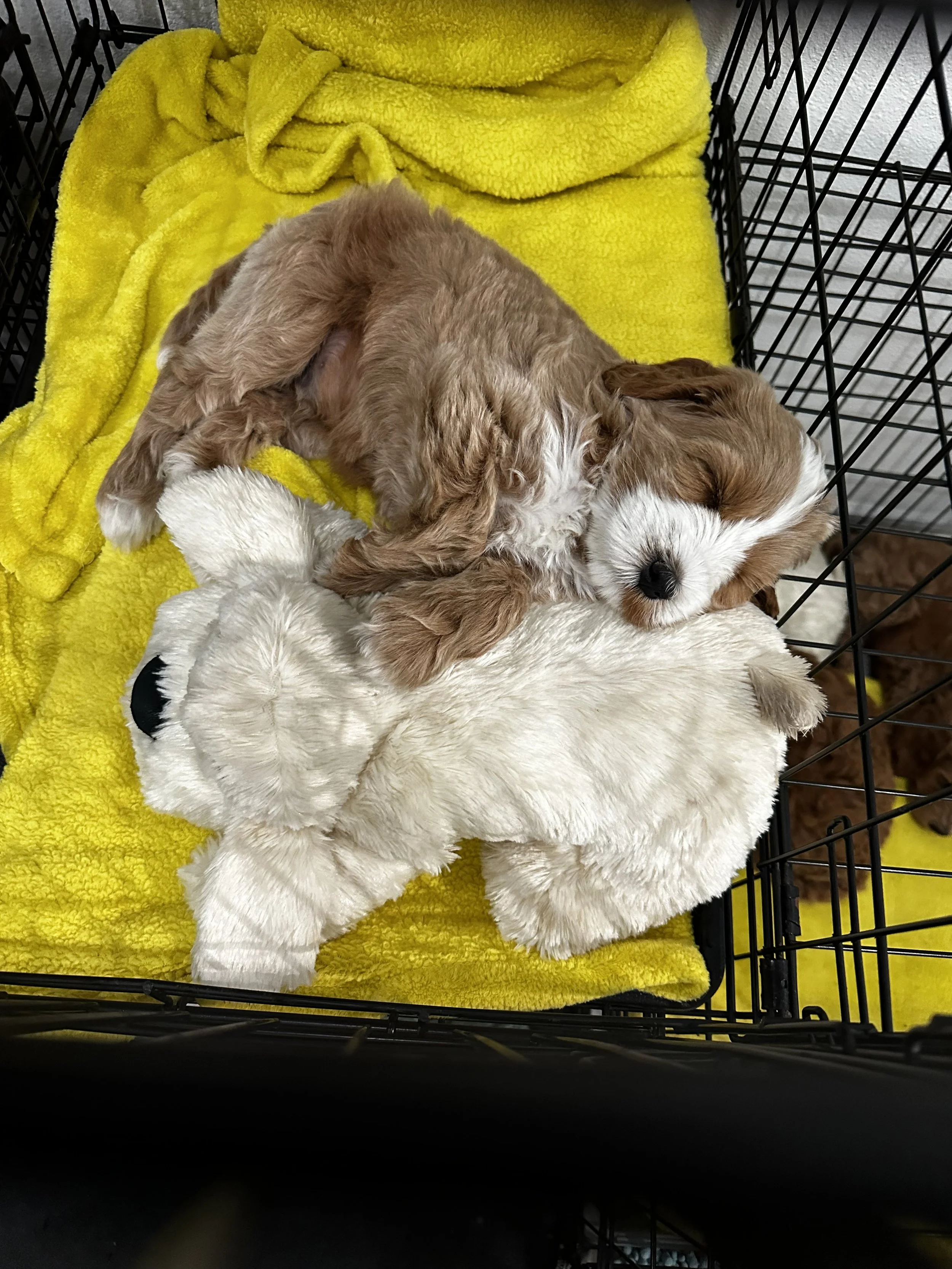
Snuggle Puppy carrying the scent of their mother and littermates
Lifetime support from us
That last item is not a formality.
We are genuinely available to you after your puppy goes home. Whether it is a question in week 9 or a concern three years down the road, you can reach us.
What Comes Next:
Training
The go-home schedule we provide covers the first two weeks. After that, we strongly encourage you to begin working with a professional trainer as quickly as possible.
The habits your puppy builds in the first year are the ones your adult dog carries. Every training session, every boundary you set clearly and consistently, and every positive socialization experience during this window compounds into the dog you will have a decade from now. That investment is worth making early.
We only recommend programs we trust and stand behind: Baxter and Bella is an online training program with a lifetime membership that includes live trainer calls, videos, and a community (use code WESTHAVEN for 25% off)
You can find more information on our Resources page along with everything else we recommend for new families.
Ready to Get Started?
Questions before applying?
Contact us here or follow along on Instagram and Facebook to see our current and upcoming litters